Have you ever realized moisture products might be a scam?
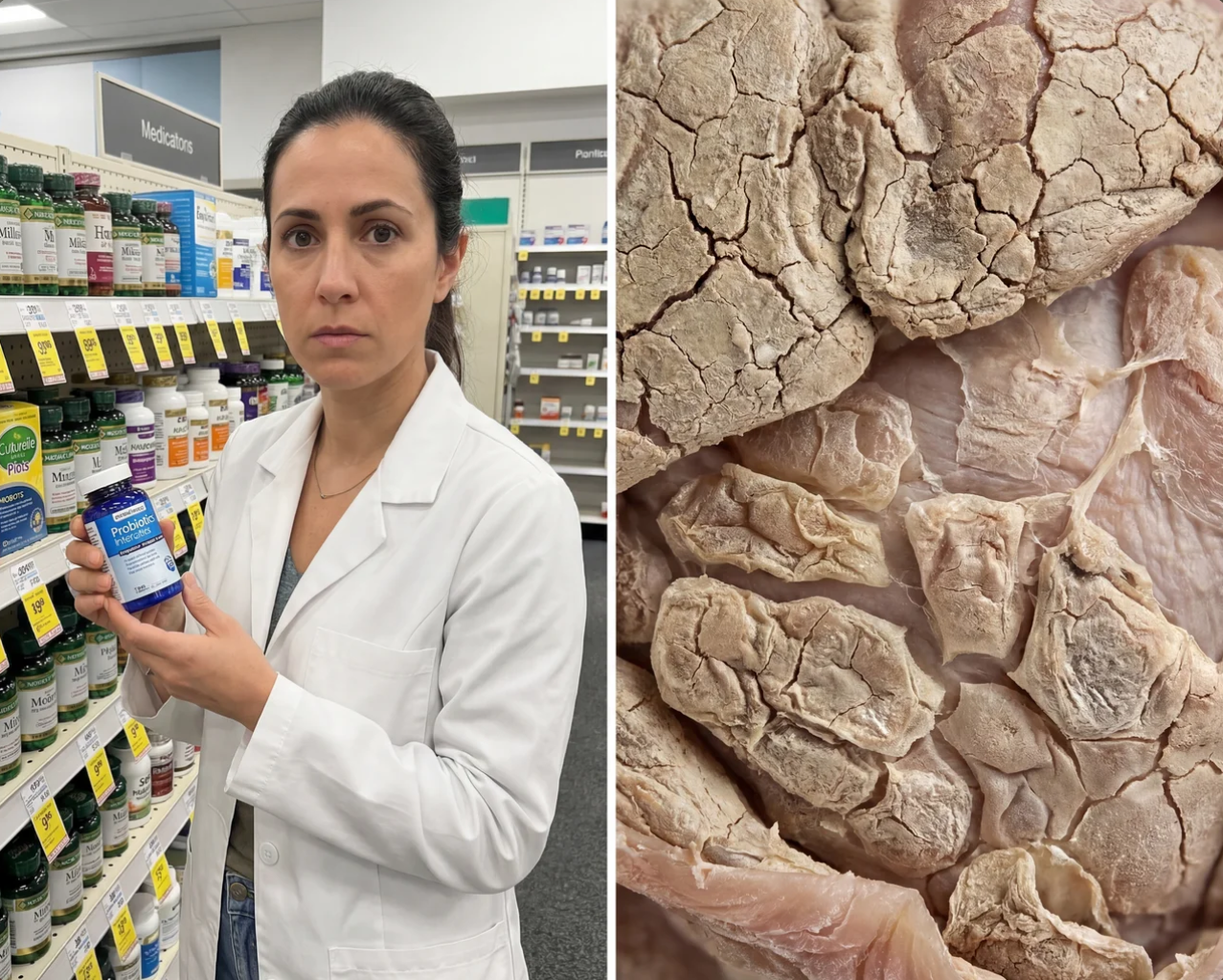
1 in 3 American women take probiotics for vaginal health. But if they actually worked, why does the dryness keep coming back?
Why do you find yourself back at the pharmacy every few months buying another bottle of lube, another gel suppository or another round of the same treatments that "worked" before?
My name's Dr. Sarah Weng and I've been researching women's sexual health for over 12 years.
And what I'm about to share with you is going to make you question everything your doctor told you about treating vaginal dryness.
Because if you've ever wondered why it keeps coming back, why it's difficult to completely get rid of, the underlying reason it persists remains the same.
So let me explain why this happens. But first I need you to understand something that the medical establishment doesn't want you to know.
And they never could, at least not on their own. But not because they're bad bacteria or because you bought the wrong brand or even because you didn't take them long enough...
They can't work because of something called biofilm.
You see, as we age or go through perimenopause, vaginal tissue cell turnover slows way down.
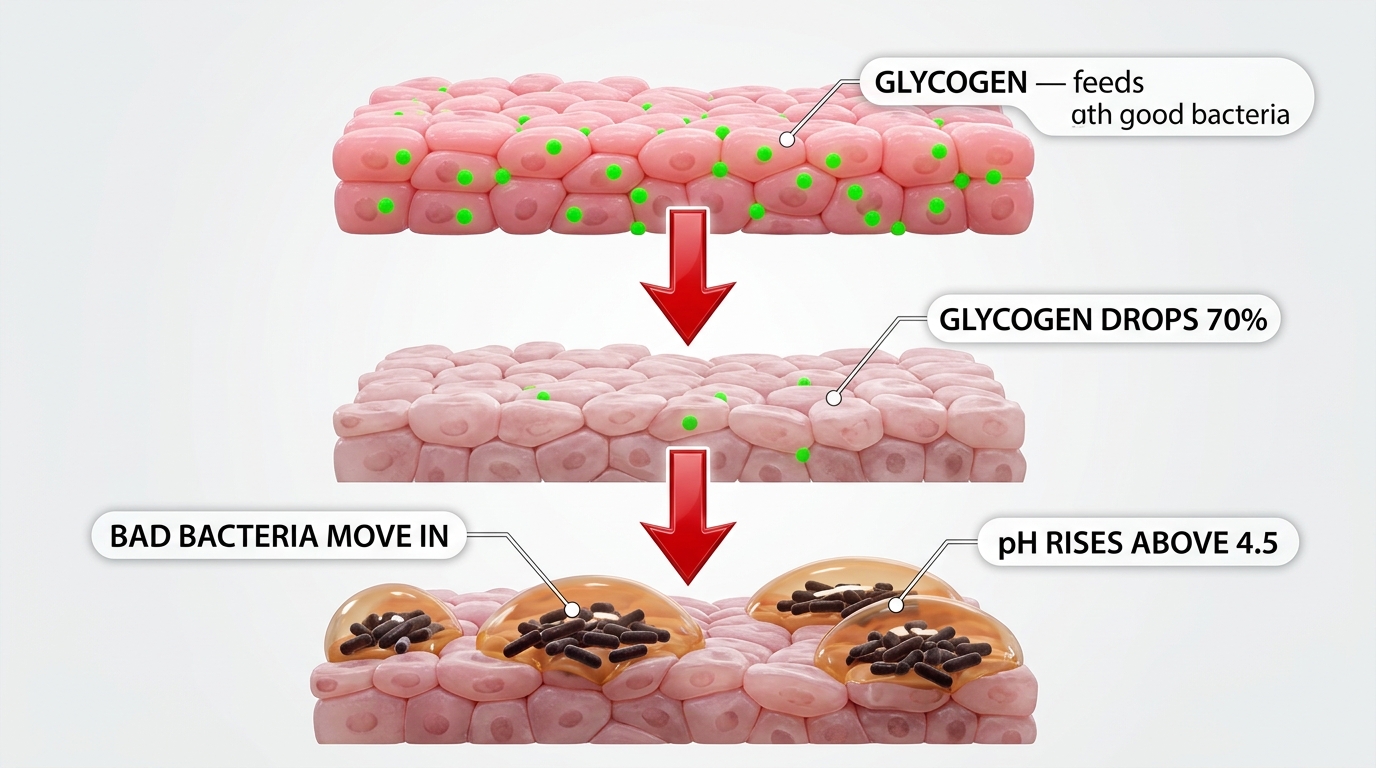
And when cell turnover slows, something called glycogen content in vaginal cells drops. It can drop by up to 70%.
And glycogen feeds the good bacteria called lactobacilli.
So when glycogen drops, lactobacilli populations collapse. And lactobacilli produce lactic acid which keeps vaginal pH acidic below 4.5.
That acidic environment is what signals your vaginal tissue to create natural moisture.
So when lactobacilli die off, lactic acid production stops, pH rises, and your tissue can't produce moisture anymore.
But bad bacteria move in to fill that space. And they build protective shields around themselves called biofilms.
Think of this like the plaque that builds up on teeth if they aren't brushed.
But this biofilm is a protein coating pressed directly against your vaginal tissue.
And here's where it gets worse. These bad bacteria create waste and toxins.
And because the biofilm is pressed against your vaginal tissue, these toxins sit right on the tissue creating additional irritation, itchiness, and that raw burning feeling.
This is why dryness almost always comes with irritation. So it's not just lack of moisture, it's bacterial waste sitting on inflamed tissue.
And this biofilm makes bacteria up to 1,000x more resistant to treatments.
But it also physically blocks moisture from getting through the tissue.
So even when you use lubricants, the biofilm layer prevents that moisture from actually reaching and hydrating the tissue properly.
And without restoring lactobacilli, lactic acid production stays stopped, and your tissue stays dry and inflamed.
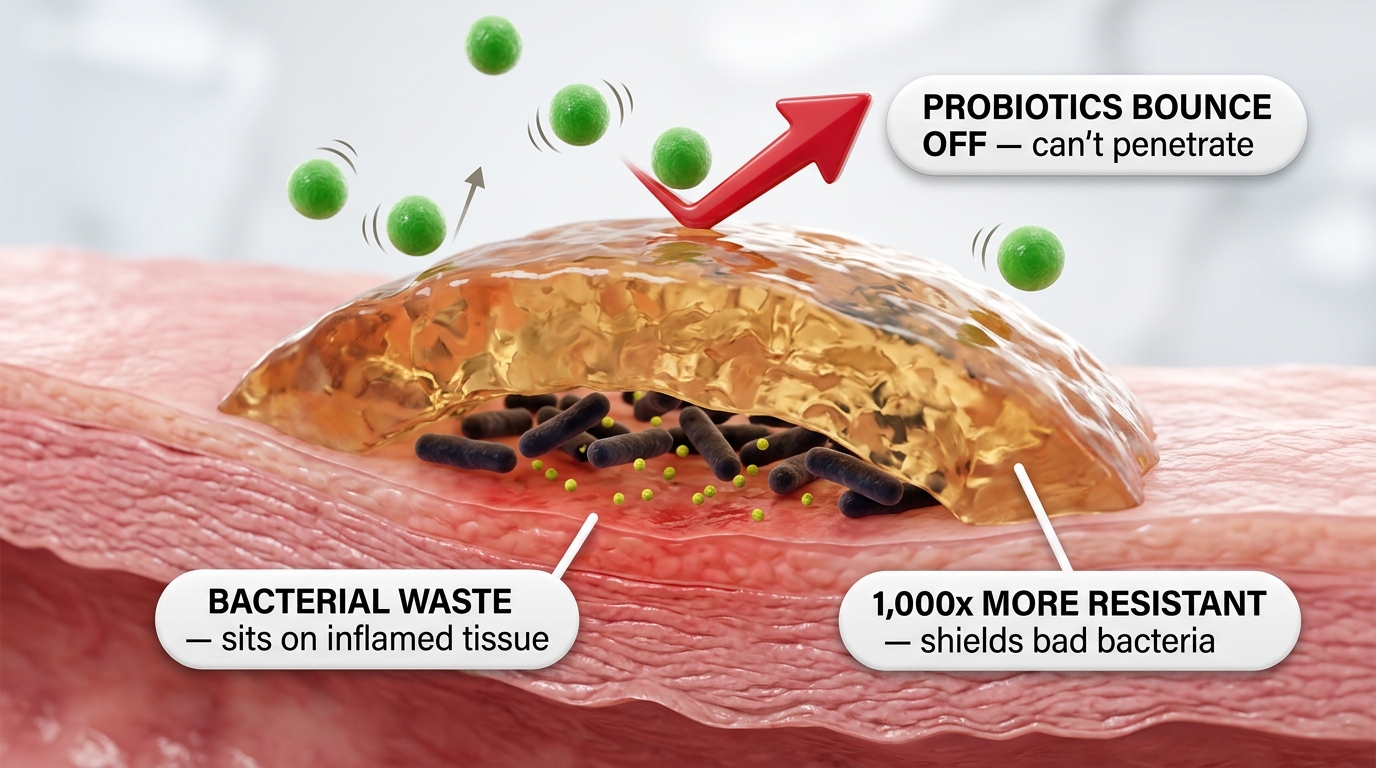
But what really makes my blood boil is the people selling probiotics know this.
Because the research has been published for years. A 2018 study in Milan showed that biofilms are responsible for up to 80% of recurring vaginal issues.
But nobody tells you this because there's no money in curing the problem, only in someone coming back month after month to buy more probiotics that can't penetrate the biofilm.
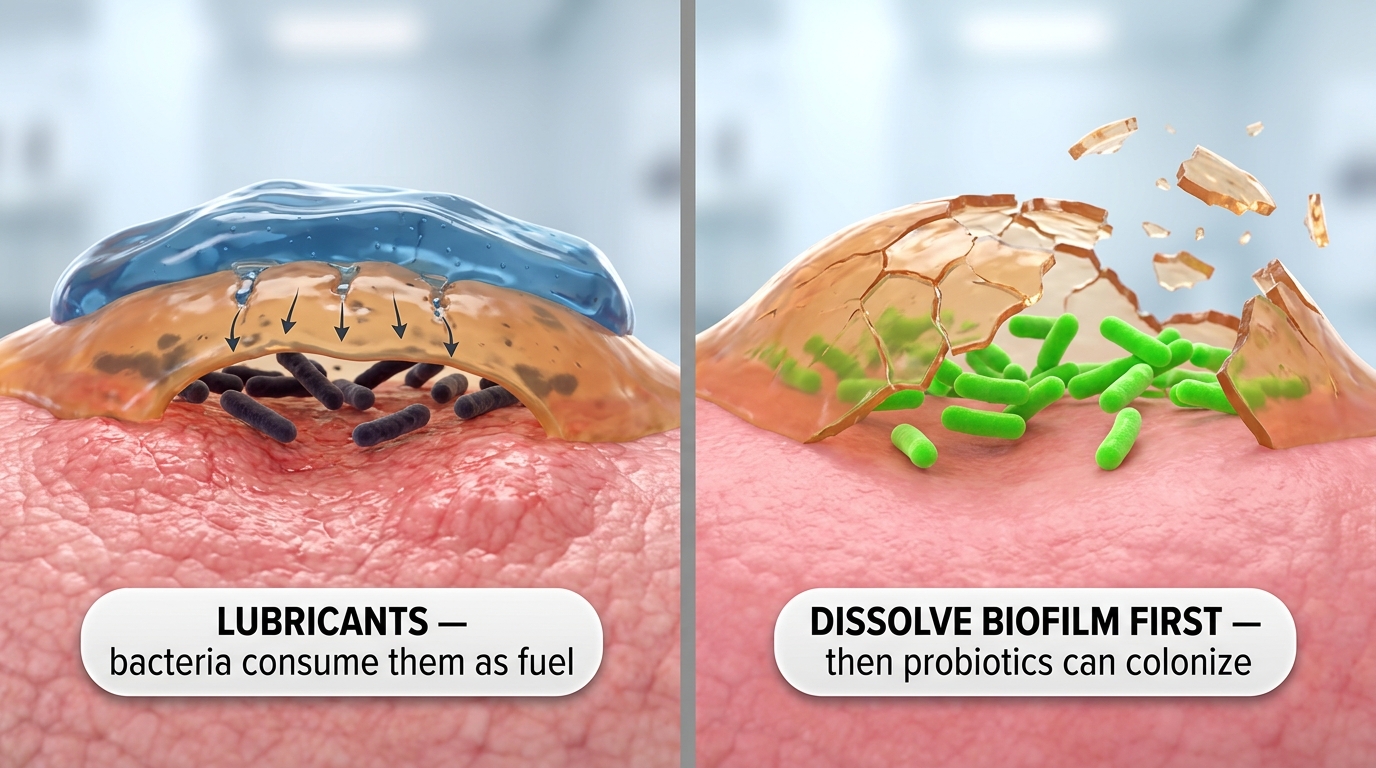
So here's what they won't tell you about these treatments. Lubricants and coconut oil provide temporary relief because they add moisture to the surface.
And for about 20 minutes, maybe 30, you feel better. But then the dryness comes right back. Why?
Because the bad bacteria under the biofilm actually metabolize these lubricants. They break them down and consume them as fuel.
So not only does the relief not last, but you're literally feeding the bad bacteria that are causing the problem.
So while it might feel like it's helping in the moment, you're sealing in the bacteria and toxins that are causing the inflammation and dryness in the first place.
This is why women tell me they've gone through bottles and bottles of lubricant, tried every type of oil, and nothing sticks.
You need two things to work together.
First, you need a probiotic that can actually survive in the low-glycogen environment mature women have.
Because most probiotics are designed for younger women with high glycogen levels. So even if you break down the biofilm, regular probiotics can't colonize because they starve in low-glycogen tissue.
And second, you need to break down the biofilm so that probiotic can actually reach the tissue and restore lactic acid production.
It contains Bacillus coagulans SNZ-1969, a spore-forming probiotic that was first isolated in Japan in the 1960s specifically for mature women's health.
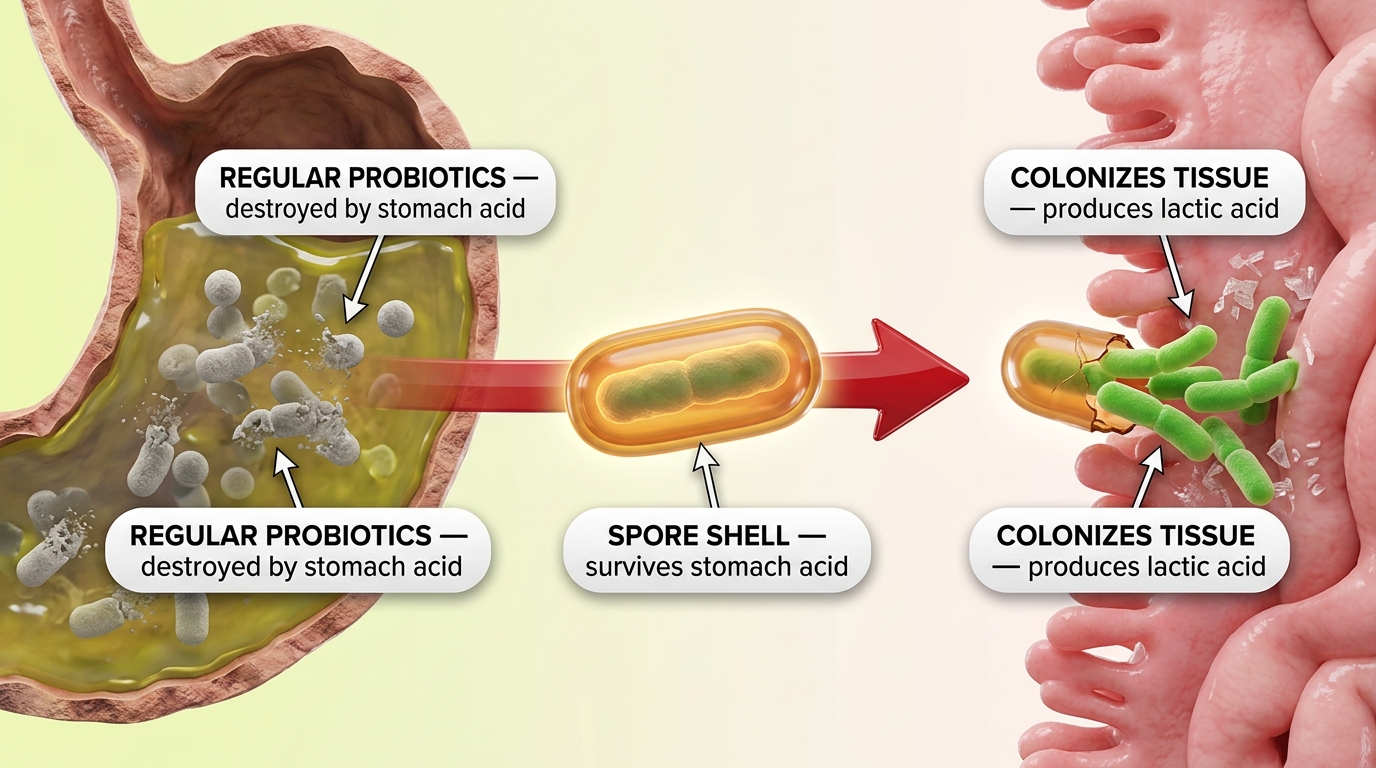
And here's why this strain is different from every other probiotic you've tried. Most probiotics fail for two reasons.
But Bacillus coagulans has a protective spore shell that survives stomach acid, so nearly 100% of the dose makes it to your gut where it seeds your vaginal microbiome through the gut-vagina axis.
Second, and this is the critical part most people miss, regular probiotics need high glycogen levels to survive and colonize.
So even if they make it past your stomach acid, they can't establish in mature women's tissue because glycogen has dropped by 70% after perimenopause.
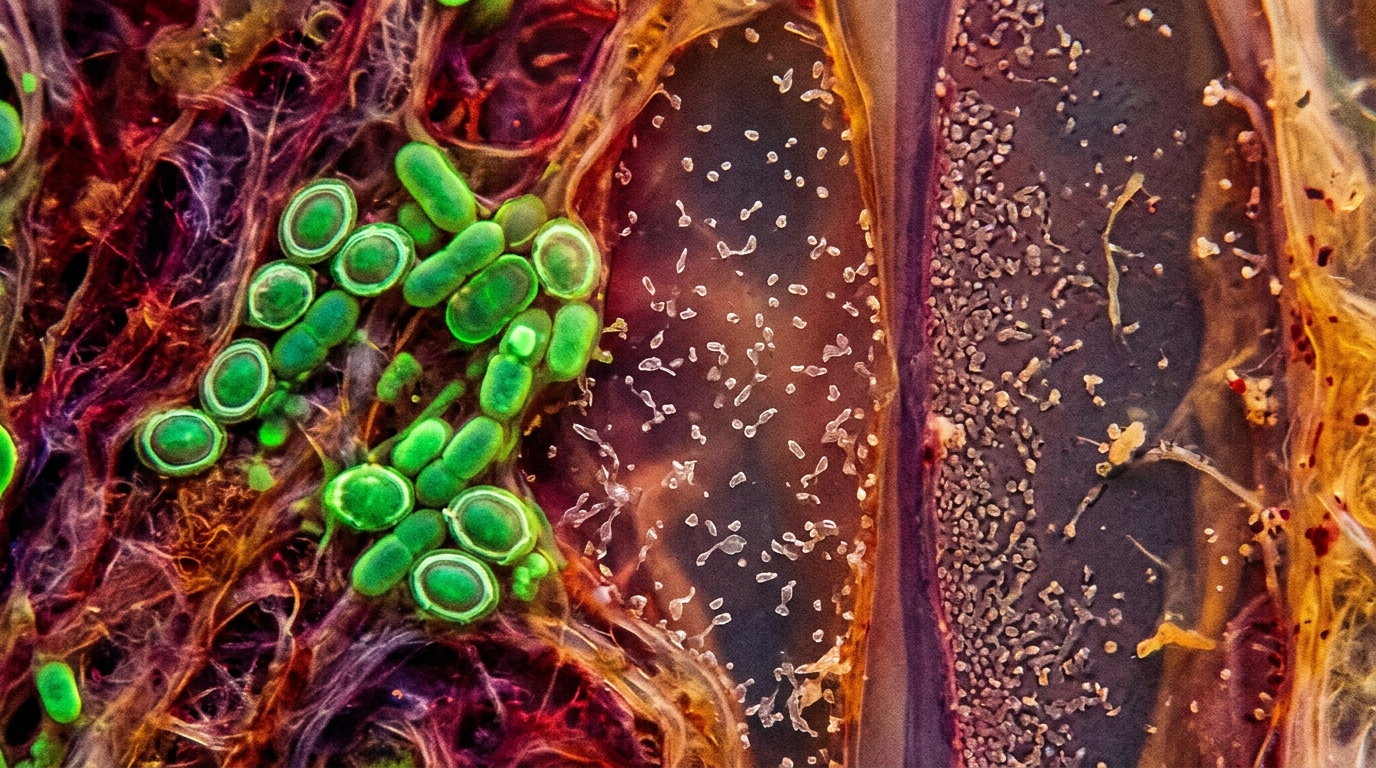
But Bacillus coagulans needs significantly less glycogen to survive compared to other strains. So it can actually colonize and thrive in the low-glycogen environment that mature women have during perimenopause and menopause.
And what makes it so effective for dryness specifically is it produces massive amounts of lactic acid, way more than typical probiotics.
That lactic acid lowers vaginal pH back down below 4.5, and that acidic environment signals your tissue to create natural moisture from the inside.
So you're not just coating the surface like with lubricants, you're restoring your body's ability to produce its own moisture.
But it also secretes antimicrobial compounds like bacteriocins and hydrogen peroxide which inhibit Candida and harmful bacteria causing inflammation.
And this matters because inflammation makes dryness worse and causes that burning or cutting sensation during intimacy.
So Bacillus coagulans doesn't just restore moisture, it clears out the pathogens making the dryness unbearable in the first place. — Dr. Sarah Weng
Secondly, it contains bromelain extracted from Queen pineapple stems grown in Australia.
Now this might sound funny, but the type of pineapple actually matters because the Queen variety has 40% higher bromelain concentration than regular pineapples.
Why? Because they grow in volcanic, mineral-rich soil and intense sunlight in specific regions of Australia.
So these growing conditions stress the plant, which causes it to produce higher concentrations of protective enzymes in the stems.
And less water content means more concentrated enzymes and higher proteolytic activity.
And Nuora extracts the bromelain specifically from the stems, not the fruit, because that's where the enzyme concentration is highest.
In clinical studies, this level of bromelain dissolved up to 98% of vaginal biofilm structure which is enough to completely break down the protective barrier.
So the immune system can deal with the bad bacteria and Bacillus coagulans can actually colonize.
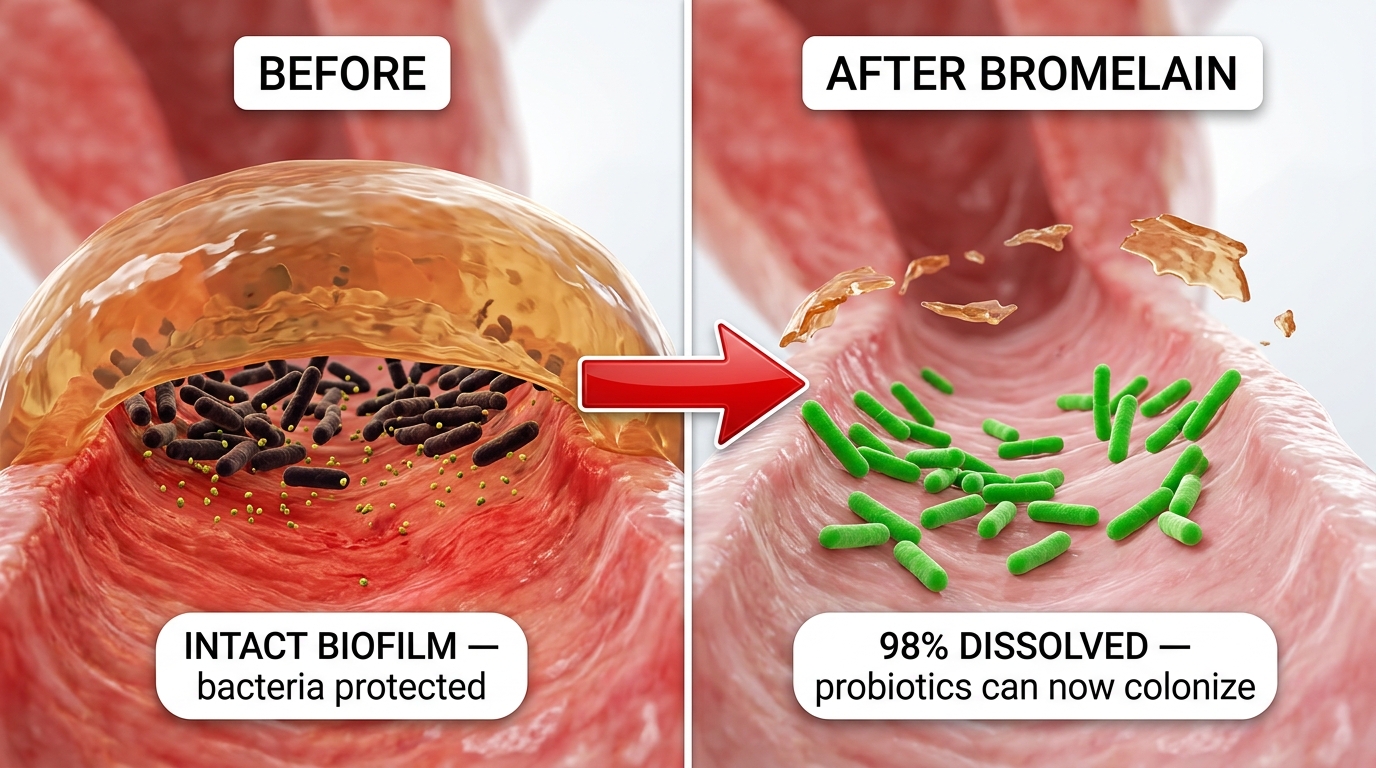
Because even though Bacillus coagulans produces those powerful antimicrobial compounds, if bad bacteria are hiding behind biofilm, probiotics can't colonize and clear them out.
So the bromelain dissolves that biofilm without damaging healthy tissue, which allows Bacillus coagulans to get through, colonize, and start producing the lactic acid and antimicrobial compounds that restore moisture.
Thirdly it includes pectin which is a prebiotic to feed the good bacteria once they colonize.
So it's not just introducing good bacteria, but giving them the fuel to thrive and stick around.
And fourth, it has vitamin C to support vaginal tissue repair from the bacterial damage and inflammation.
And that's how you know the biofilm was actually dissolved and the good bacteria are properly colonized.
Because breaking down biofilm and actually curing the problem doesn't make pharmaceutical companies money.
But selling probiotics that don't work month after month does.
And I'm not saying your doctor is trying to scam you but most doctors simply aren't taught about biofilm in medical school.
Because they're taught to prescribe antibiotics for acute infections and recommend probiotics for maintenance.
But the research on biofilm has only been published in the last few years so the medical establishment just hasn't caught up.
Or maybe they have, and there's no incentive to change the system.
Either way, you deserve to know the truth.
Because if you're tired of the dryness coming back, tired of buying probiotics that don't work, tired of feeling like you've tried everything...
So you need a probiotic that can actually survive and colonize in low-glycogen environments, and you need to break down the biofilm first with real bromelain from pineapple stems.
That's the only way to stop the cycle.
So if you still see the link below active, there's still inventory available.
Click here to try Nuora and finally address the root cause instead of just masking symptoms.
You have nothing to lose except the dryness that's been holding you back for months.
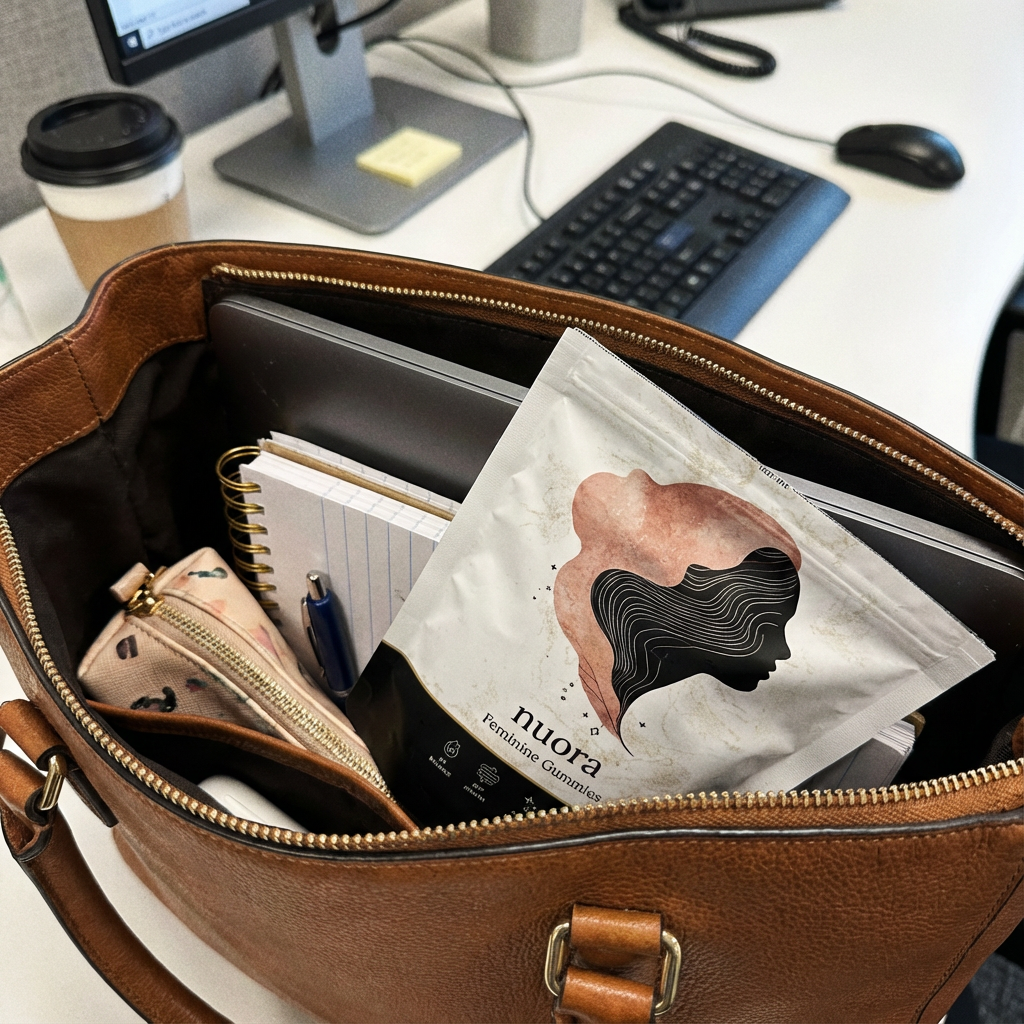
Nuora Vaginal Probiotic Gummy
Sincerely,
Dr. Sarah Weng, MD
Sexual Health Researcher