23 Treatment Cycles in 5 Years. Then I Found Out What None of Them Were Targeting.

My OB/GYN sat across from me in 2022 and said, "Some women just have a more sensitive microbiome. We can keep treating episodes as they come."
I had already been treating episodes as they came for four years.
Metronidazole. Boric acid.
Every probiotic at CVS. The expensive women's health brand I kept seeing everywhere.
The ones my friend swore by. All of it.
And it always went like this: treatment, maybe 10 to 14 days of feeling okay, then slowly, steadily, back to exactly where I started. Sometimes sooner.
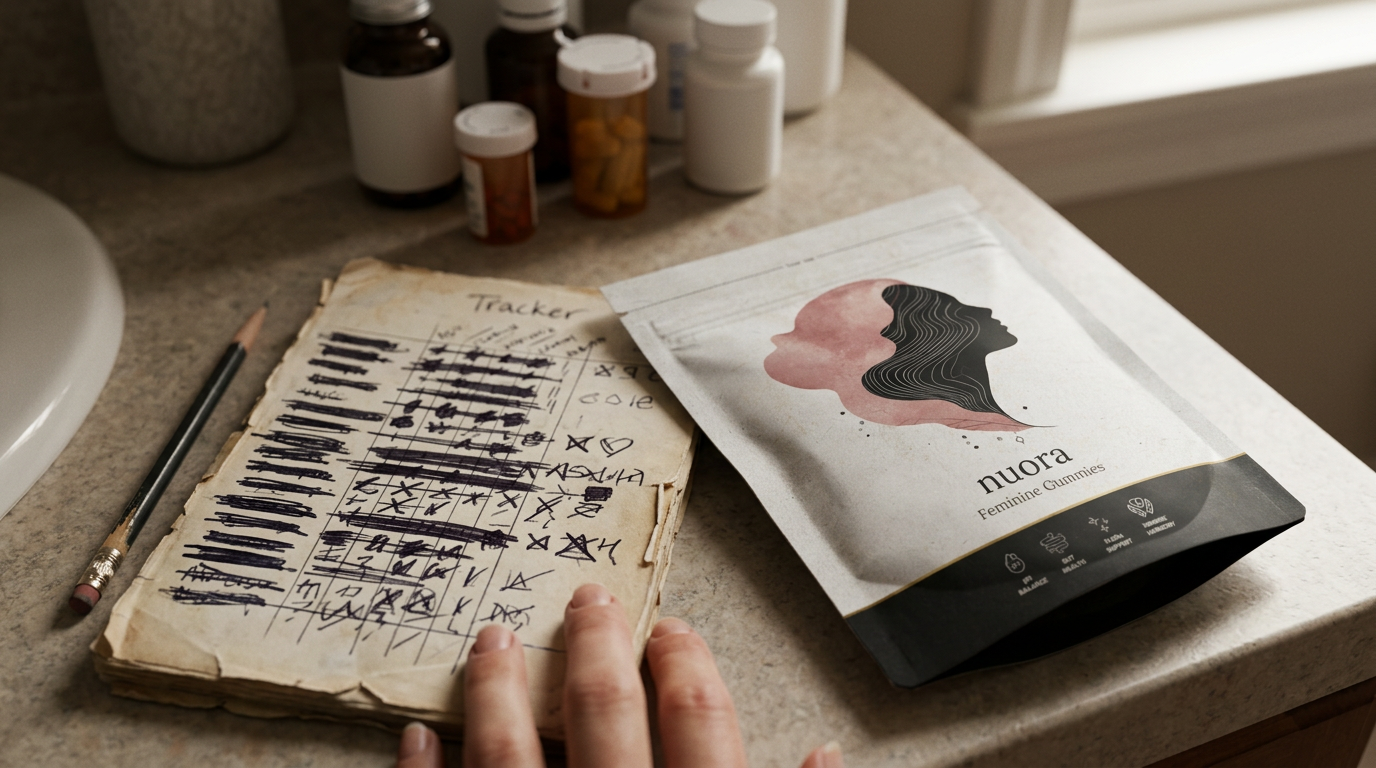
I kept a notes app where I logged every episode since 2019. I counted them last year. 23 separate treatment cycles in 5 years.
At some point I stopped being frustrated and just went numb to it. I knew the drill.
I knew how long the relief would last. I knew what came next.
I always felt like I needed to freshen up before anything intimate. Which made spontaneity basically impossible.
My husband never said anything, but I could feel myself pulling back.
That quiet distance is its own kind of exhausting.
By the time I got to that 2022 appointment, I wasn't even upset anymore. I told my doc I was just tired of trying so many things that didn't work.
That this was my last try before I accepted this was just my life.
She was kind about it.
But she didn't have anything new for me. Another round of antibiotics if I wanted.
I didn't take them.
What I Found on PubMed That Explained Every Failed Treatment
A few months later I was on a women's health forum and came across a thread.
A woman had written maybe four paragraphs about why recurring BV specifically doesn't respond to antibiotics long-term, and she mentioned something I had never heard about.
Biofilm.
So I pulled up PubMed and started reading. And what I found explained every single failed treatment cycle I had ever had.
Here is what is actually happening at the structural level.
Bad bacteria — specifically Gardnerella, the main driver of BV — don't just float around in your vaginal environment. They build a structure.
A slimy, protective layer that anchors to the vaginal walls and acts like a shell around them. Researchers call it biofilm.
And this biofilm is not affected by antibiotics. It is not affected by standard probiotics.
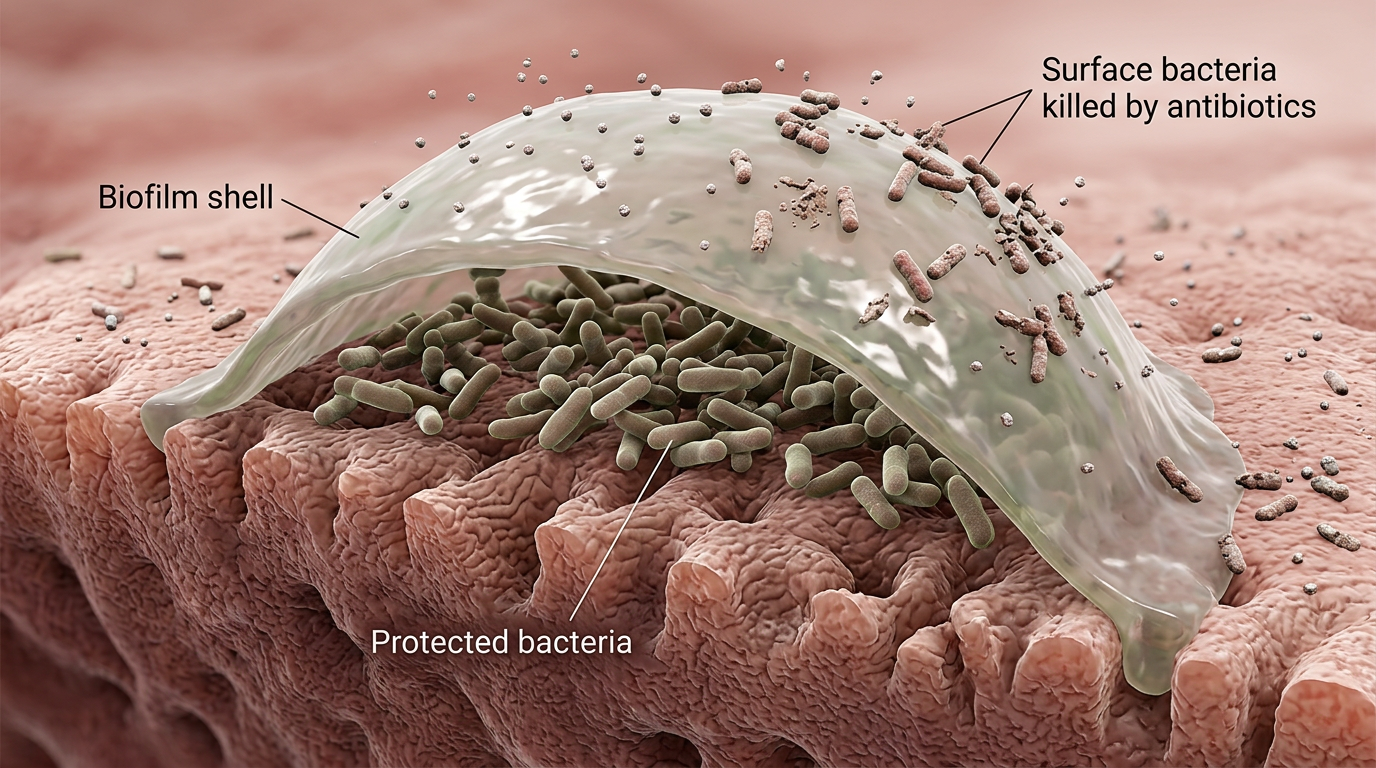
So when you take a round of metronidazole, it kills the surface bacteria. The unprotected ones.
And you feel better. For a while.
But the biofilm stays. The bacteria living inside it survive.
Within 2 to 4 weeks they start repopulating from inside the structure they never had to leave.
Which meant every single treatment I had done was working exactly as designed. It just wasn't designed to address the actual problem.
You cannot reach something with a tool that was never built to reach it.
And there is something worse.
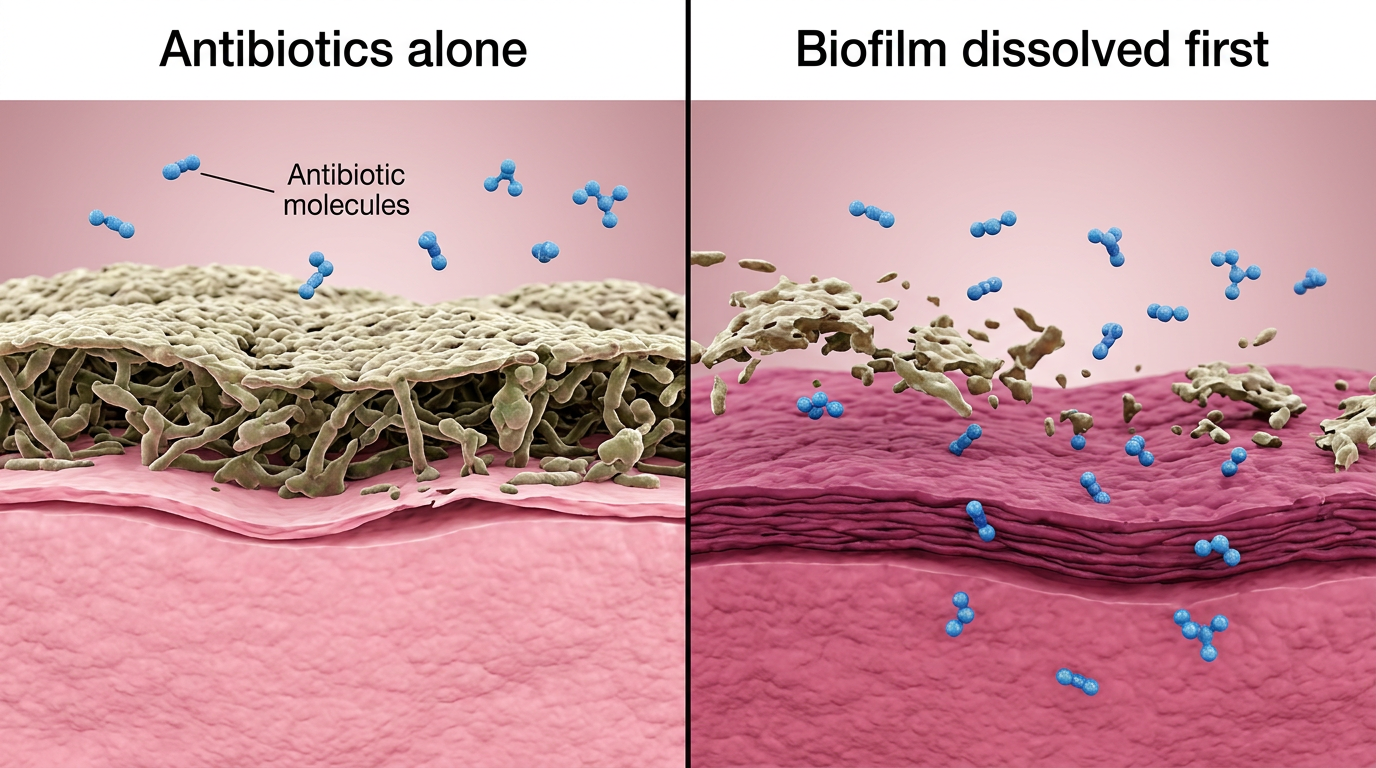
When you take standard probiotics or antibiotics that can only reach the surface, the bad bacteria underneath the biofilm can sense they are being attacked.
There is a scientifically documented process called dispersal — the bacteria respond by growing and creating more biofilms.
Harder. Thicker. Stronger to break down. Especially as we age.
So the very treatments most women are reaching for? They can actually make the underlying structure more resilient over time.
The Three-Part Mechanism That Actually Made Sense
So I started looking for what actually dissolves biofilm first.
One research paper kept coming up. It was about an enzyme called bromelain, which comes from the stem of pineapple — specifically, not the fruit, the stem, where the enzyme concentration is highest.
It had been studied for its ability to break down the polysaccharide matrix that biofilm is made of.
So when you dissolve that matrix first, and then add a probiotic, the good bacteria actually have somewhere to land. They can colonize.
They can stay.
But then I found the second problem.
Standard probiotics — the Lactobacillus strains in basically every product I had tried — mostly die in stomach acid before they even reach where they need to go.
There is a specific type called spore-forming probiotics. The strain is Bacillus coagulans SNZ1969.
Unlike regular strains, it survives the stomach, travels through the gut-vaginal axis, and reaches vaginal tissue intact.
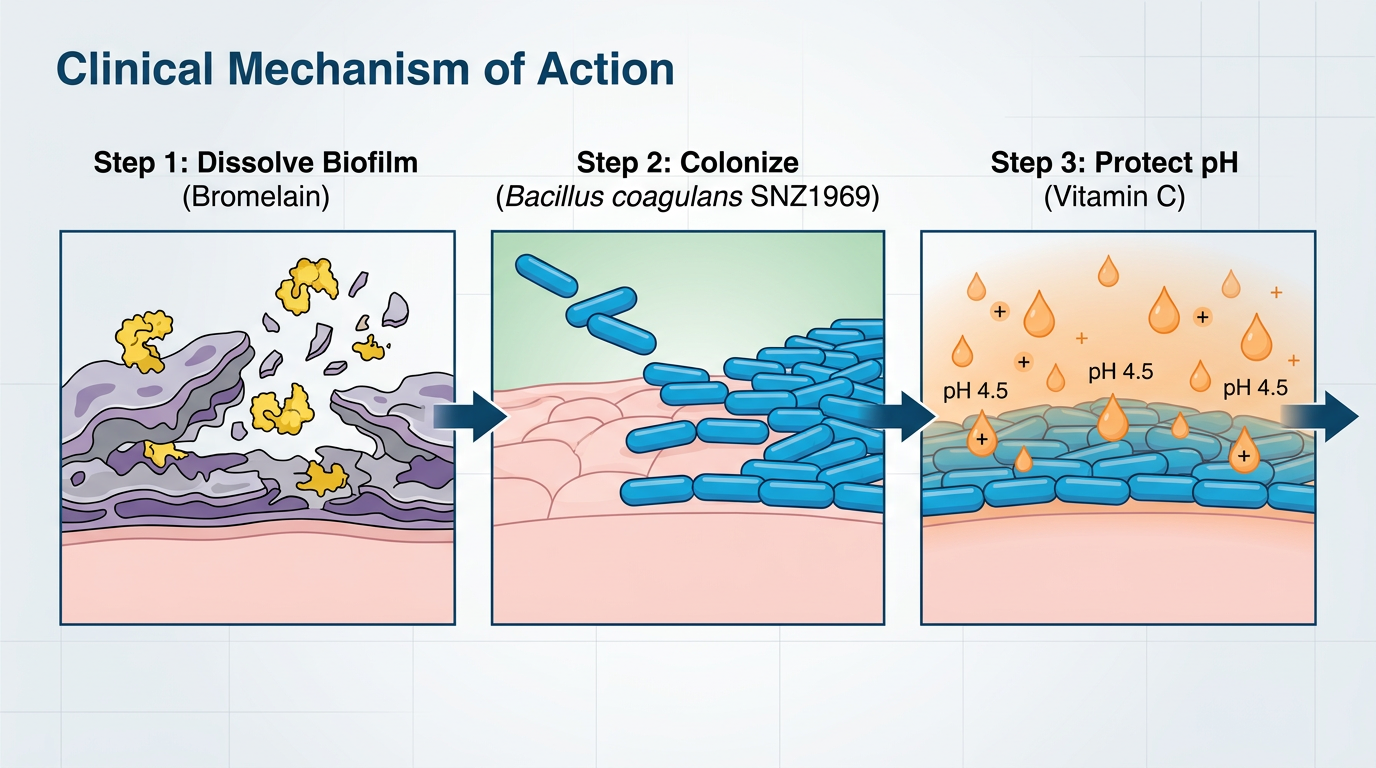
So the combination made mechanical sense to me:
-
01
Step 1 — DissolveBromelain from pineapple stem breaks down the polysaccharide matrix the biofilm is made of. The protective structure opens.
-
02
Step 2 — ColonizeBacillus coagulans SNZ1969, a spore-forming probiotic, survives stomach acid and reaches vaginal tissue intact. Now it actually has somewhere to land.
-
03
Step 3 — ProtectVitamin C helps maintain the acidic pH that stops bad bacteria from rebuilding the same structure all over again.
Week 8: There Was Nothing to Track
I was extremely hesitant at this point. I had been at this exact crossroads before.
Researched something, felt that small flicker of hope, tried it, ended up back in my notes app logging another cycle.
But every treatment I had tried before targeted the bacteria directly.
This targeted the structure protecting them first.
That was a different category entirely.
I found a product called Nuora gummies. Formulated with exactly those three things: pineapple stem bromelain, Bacillus coagulans SNZ1969, and vitamin C.
I ordered them thinking, well, what do I have left to lose.
Week 3, nothing dramatic. Week 5, I noticed I just wasn't thinking about it as much.
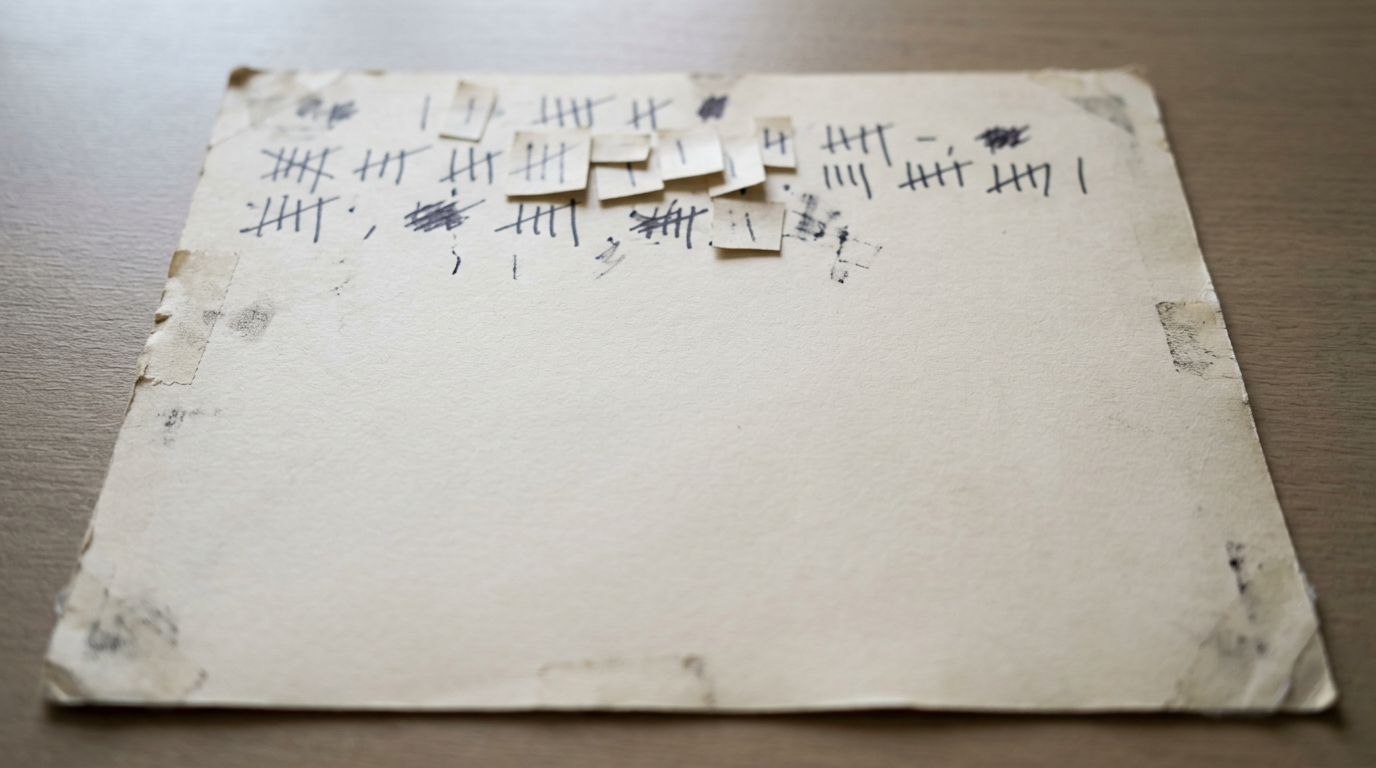
Week 8, I realized I hadn't logged anything in my notes app. Not because I forgot to track.
Because there was nothing to track.
23 treatment cycles in 5 years. Zero in the last ten months.
I don't freshen up before intimacy anymore. I don't plan around it.
I don't think about anything down there the way I used to. My husband and I are just… us again.
That spontaneity I thought I had permanently lost? It came back so quietly I almost didn't notice.
I know saying "I feel free" sounds like a lot to say about a gummy. But if you have been in this cycle, you know exactly what I mean.
The treatments weren't failing because something was wrong with me. They were failing because none of them touched the biofilm.
It was never about trying harder. It was about what was actually being targeted.
I posted about this in the same forum where I first read about biofilm. I wasn't expecting much.
But I started getting messages from women who had been in the same cycle — some of them for longer than me — asking if this was real.
What Women Are Asking

How is this different from the probiotics I already tried?
Most probiotics use Lactobacillus strains that die in stomach acid before reaching vaginal tissue. Even the ones that survive cannot colonize if the biofilm is still intact — they have nowhere to land.
Nuora uses a spore-forming strain (Bacillus coagulans SNZ1969) that survives digestion, and pairs it with bromelain to dissolve biofilm first so the probiotic can actually do its job.
I've tried everything. Why would this be any different?
Every standard treatment — antibiotics, boric acid, conventional probiotics — targets the bacteria directly. None of them address the biofilm structure protecting those bacteria.
That is why treatments work temporarily and then fail.
This targets the structure first. It is a different category of approach.
How long before I notice a difference?
Most women report subtle shifts around weeks 4–5, with more noticeable changes by week 8. Biofilm disruption is not instant — it is structural work that builds over time.
That is why consistency matters more than speed.
What if it doesn't work for me?
Nuora comes with a 60-day money-back guarantee. If you don't see results, you get your money back.
No ambiguity.
A lot of women have been asking what I actually took.
It's called Nuora. The gummies contain the exact three-part system I described above — pineapple stem bromelain, Bacillus coagulans SNZ1969, and vitamin C — in a single daily gummy.
I know exactly how it feels to spend money on something and have it not work. I've done it 23 times.
I'm only sharing this because the mechanism actually made sense to me before I tried it, and the results followed.