The Strange Morning Ritual My Grandmother Did for Sixty Years

My grandmother started every morning the same way.
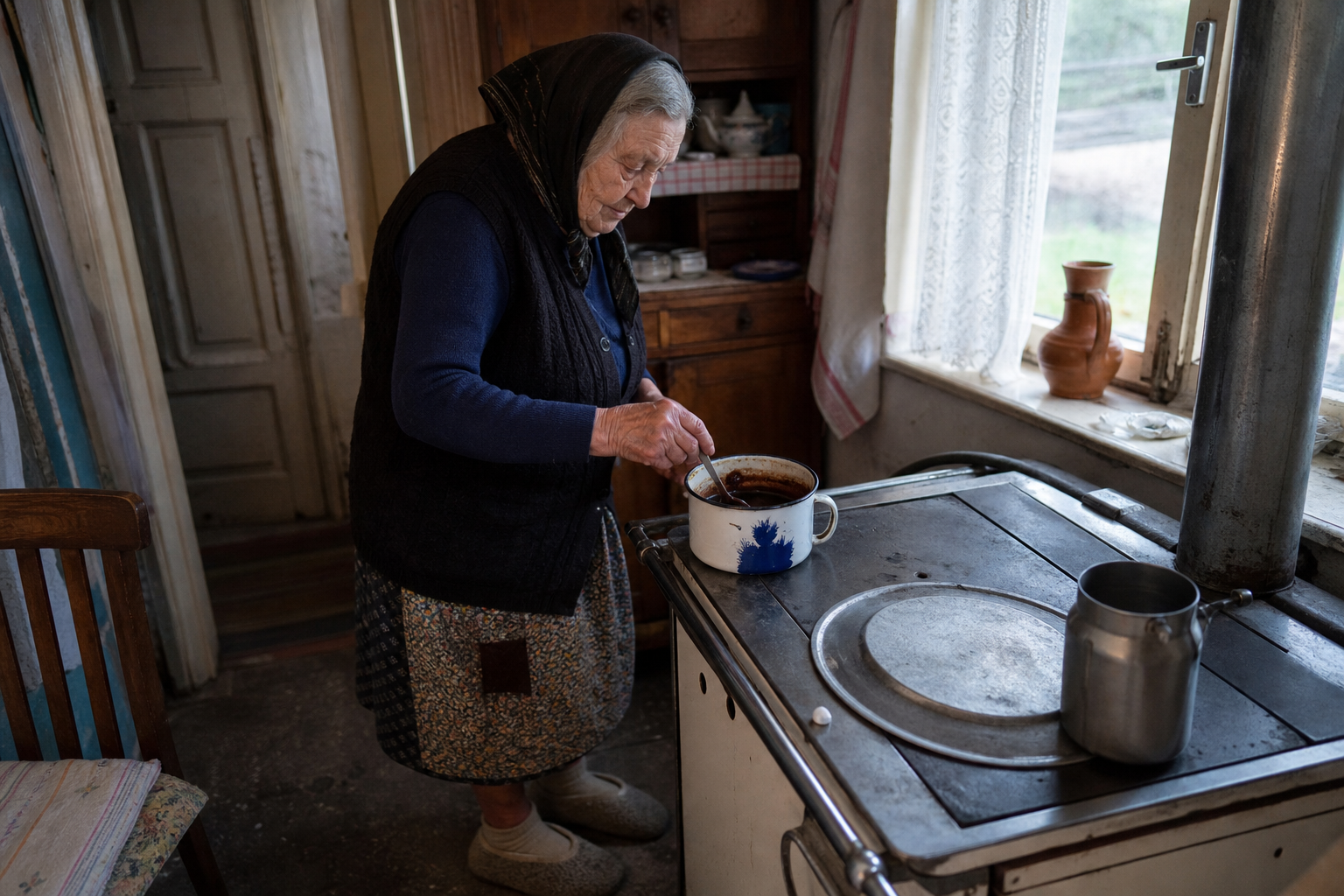
Before coffee. Before the news. Before she'd even pull the curtains back to check the weather over the village. She'd stand at the stove in her wool slippers, stir something thick and dark in a chipped enamel mug, and drink it standing up. Slowly. Like medicine.
I thought it was strange when I was little. I thought a lot of what she did was strange.
She kept a clay jar of pickled cabbage on the windowsill that smelled like a barn. She drank kefir from a glass that had been sitting on the counter overnight. She put a spoonful of bitter herbs into warm water before every big meal and waited for it to dissolve like she was casting a spell.
She lived to ninety-two. She never had a single stomach problem. Not one. The woman ate cabbage rolls with sour cream three times a week and walked four kilometers to the market until the year she died.
I, on the other hand, am thirty-four. And for most of my twenties I felt like my stomach was a stranger I lived inside of.

The bloating that came out of nowhere. The afternoon energy crashes. The brain fog that made me feel like I was watching my own life through fogged-up glass.
I tried elimination diets. I tried celery juice. I tried a probiotic that cost more than my electricity bill and tasted like dust.
Or things worked for a week and then quietly stopped.
It was my mother, eventually, who said it out loud. We were sitting in her kitchen and I was complaining again, and she stirred her tea and said, very quietly:
"You know your grandmother used to make us drink something every morning. We hated it. But none of us were ever sick like this."
That's how I started reading about the gut.
Not the cleanse-y, magazine version of the gut. The real version. The one researchers are obsessed with now — a hundred trillion microorganisms living inside you, more cells than there are in your entire body, talking constantly to your immune system and your brain and your hormones through a kind of biochemical telegraph we're only beginning to understand.
I learned that what my grandmother had been doing was not folk superstition. It was, almost embarrassingly, the same thing the latest research is shouting about.
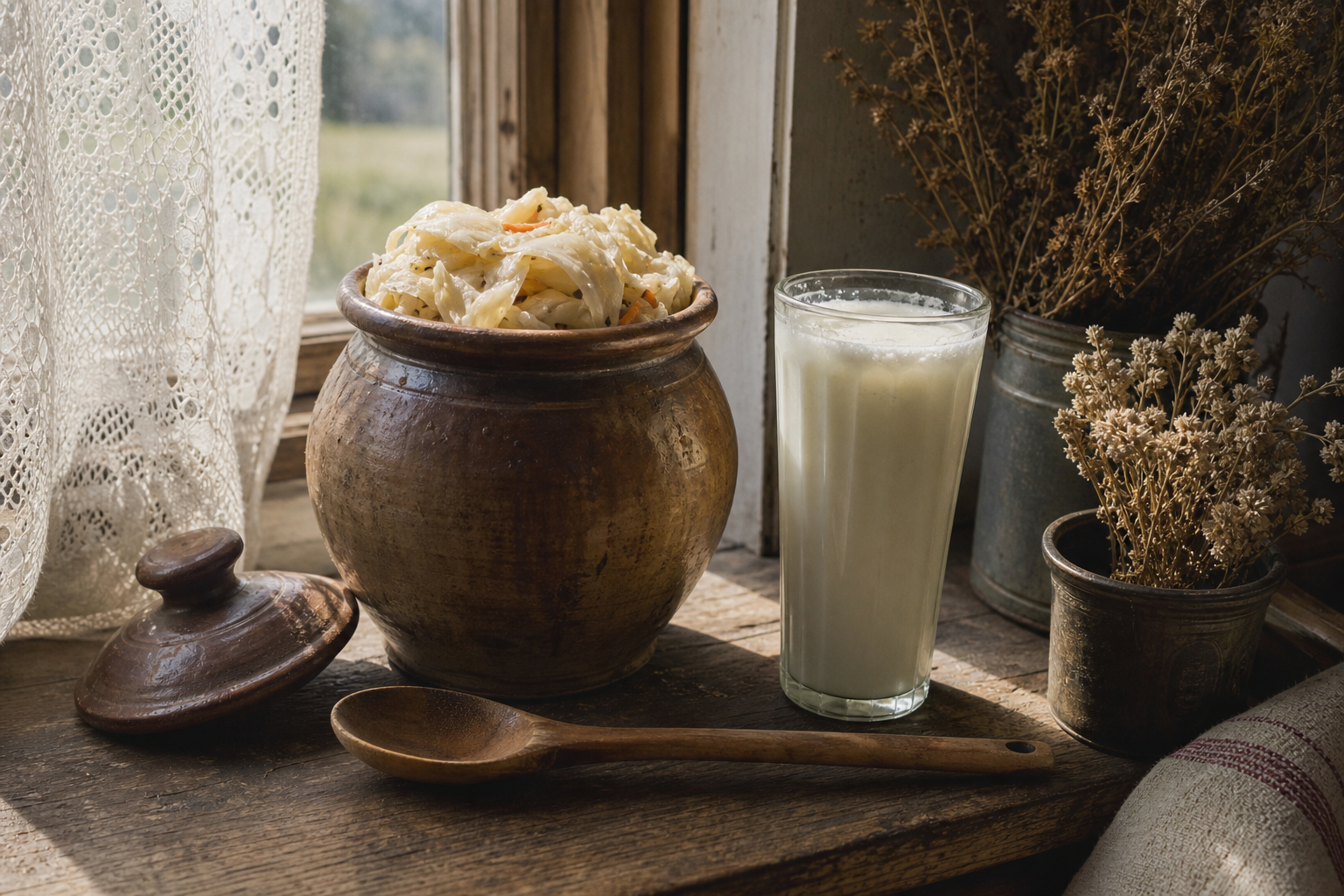
The fermented cabbage on her windowsill? Lactic-acid bacteria. The kind that recolonize your gut lining and crowd out the troublemakers.
The overnight kefir? A live culture so rich in beneficial strains that researchers are studying it as an intervention for autoimmune conditions.
The bitter herbs before meals? They stimulate bile and digestive enzymes — the very things our modern, low-fat, supplement-replaced diets have starved out of us.
And that thick, dark drink in the chipped enamel mug? Bone broth. Long-simmered, gelatin-rich, mineral-saturated bone broth. Which, it turns out, contains the exact amino acids — glutamine, glycine, proline — that the lining of our intestines uses to repair itself.
She just called it breakfast.
The frustrating part — and I'll be honest, the part that made me a little angry — was how much I'd spent trying to outsource what she did for free with whatever was on the shelf. Probiotic blends with strains so weak they wouldn't survive the trip down my esophagus. Fiber powders that gave me cramps. Gummies with three grams of sugar each that I now think probably did more harm than good.
The truth, which nobody really wants to sell you because it isn't exciting, is that your gut isn't broken. It's just been raised on a diet of stress, antibiotics, ultraprocessed food, and panic. It doesn't need a miracle. It needs the things it was supposed to be getting all along.
I started slowly. I made my own kefir for a while. I tried to ferment my own cabbage and produced something I will not describe here. I drank bone broth every morning for almost a year, and the difference in how I felt was the kind of slow, quiet improvement you don't notice until one day you realize you can't remember the last time you felt bloated after lunch.
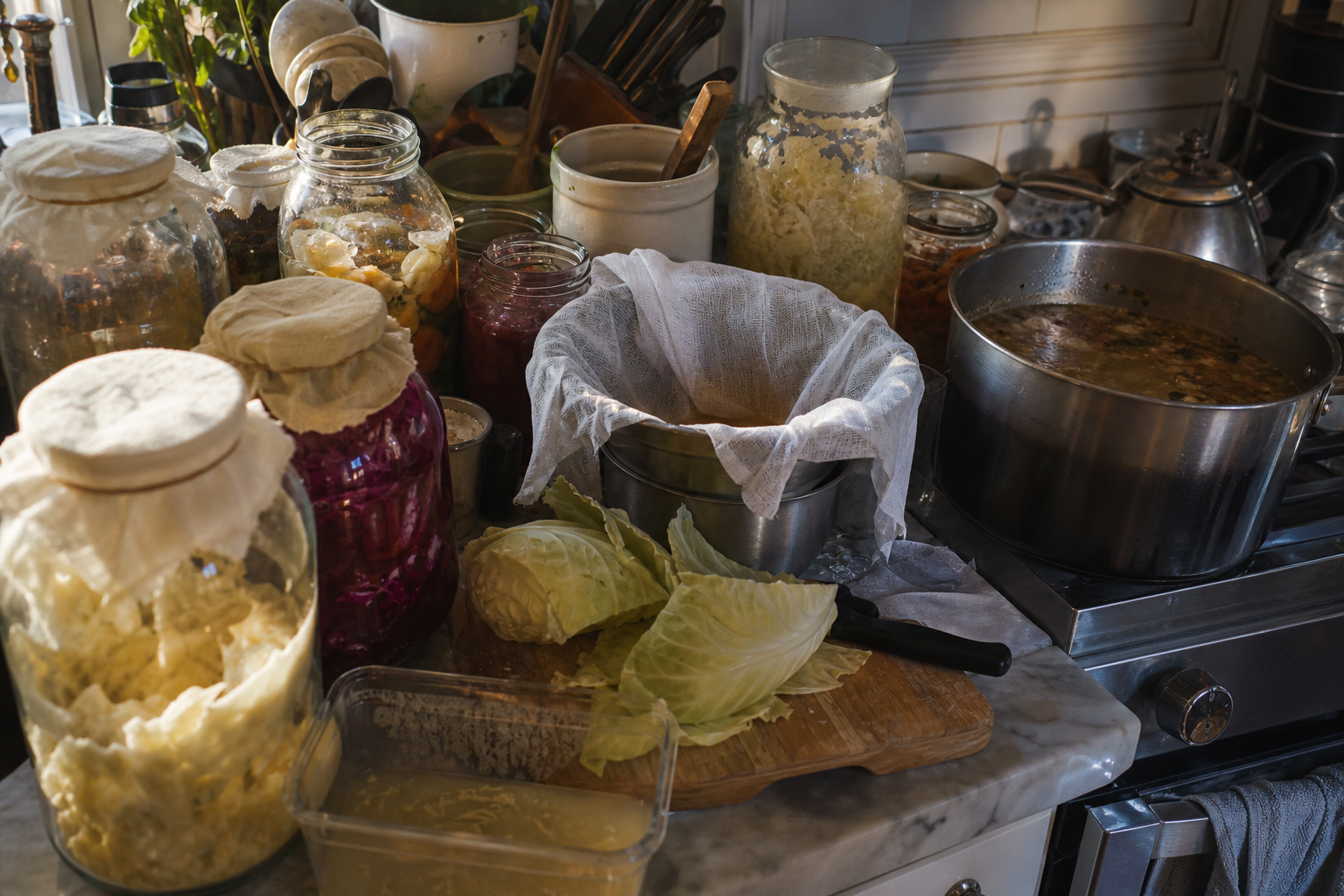
But I'll tell you what I couldn't sustain: the labor. The boiling. The straining. The small army of fermentation jars taking over my kitchen. I run a business. I travel. I have a life that doesn't accommodate a four-hour bone broth simmer on a Tuesday afternoon.
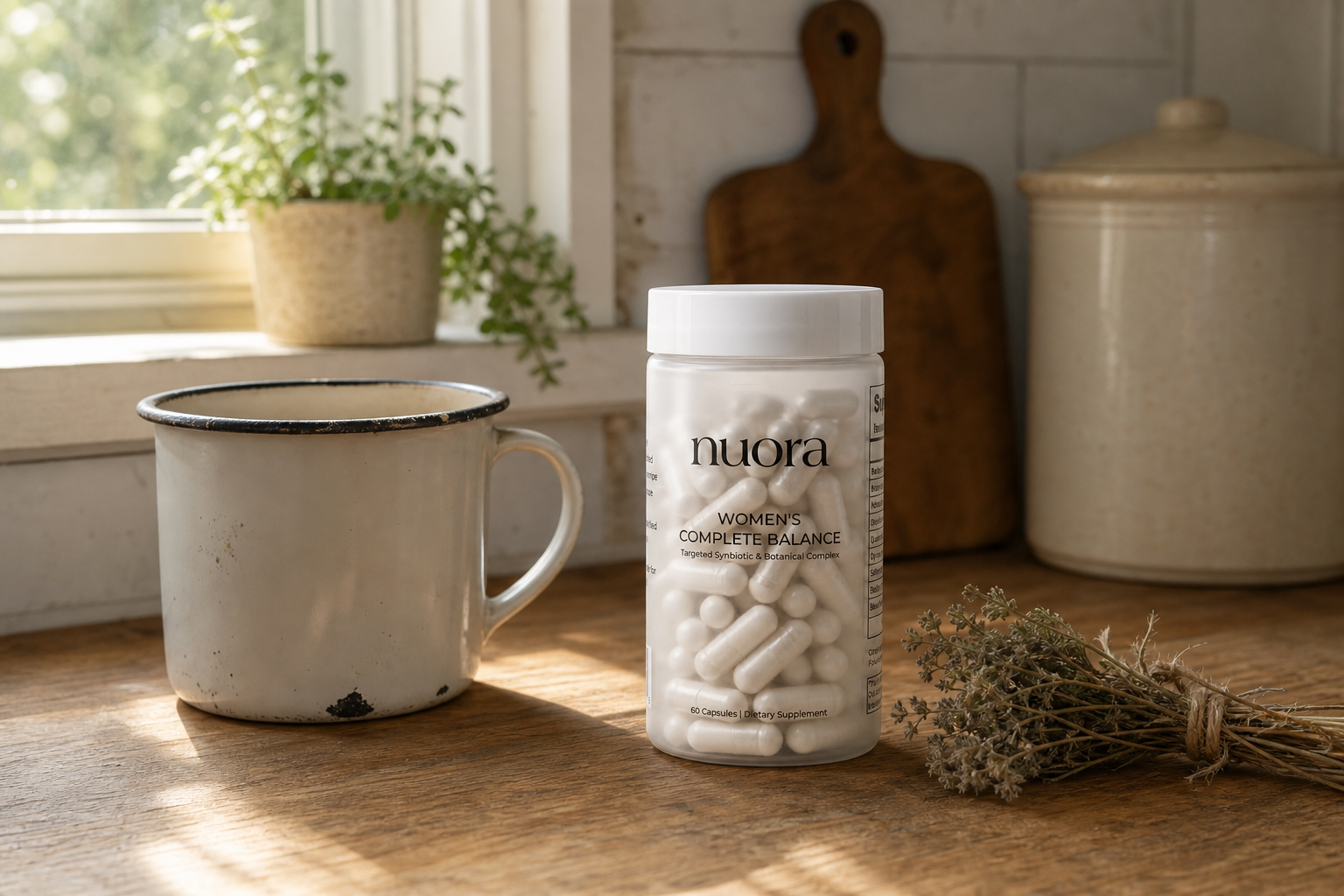
When I looked into it, the thing that struck me wasn't the marketing. It was the ingredient list. There was nothing exotic, nothing invented. Just the elements that have always worked, finally combined intelligently. Strains robust enough to make it past stomach acid. The mineral and amino-acid scaffolding the gut lining actually uses to rebuild itself. The bitter, digestive-supportive plants my grandmother kept in tins next to the bread.
It felt, oddly, like a continuation of her morning routine. Not a replacement. A modern version of what she'd been quietly doing in that kitchen for sixty years.
I started taking it. I haven't stopped.
I think about my grandmother often when I do. The chipped mug. The wool slippers. The patient, unhurried way she took care of herself — long before anyone was using the word "microbiome," long before there was money to be made from it.