The Fermented Milk That Was Worth Kidnapping For


Between Russia and Georgia...
...about 5,000 feet up in the Caucasus Mountains.
There are small villages where something was happening that the rest of the world couldn't explain until recently...
You see, women there were sexually active well into their 80s — and their communities considered it perfectly normal.
Marriage commonly happened between ages 40 and 50, because life was long and nobody was in any rush.
And this is Khfaf Lasuria.
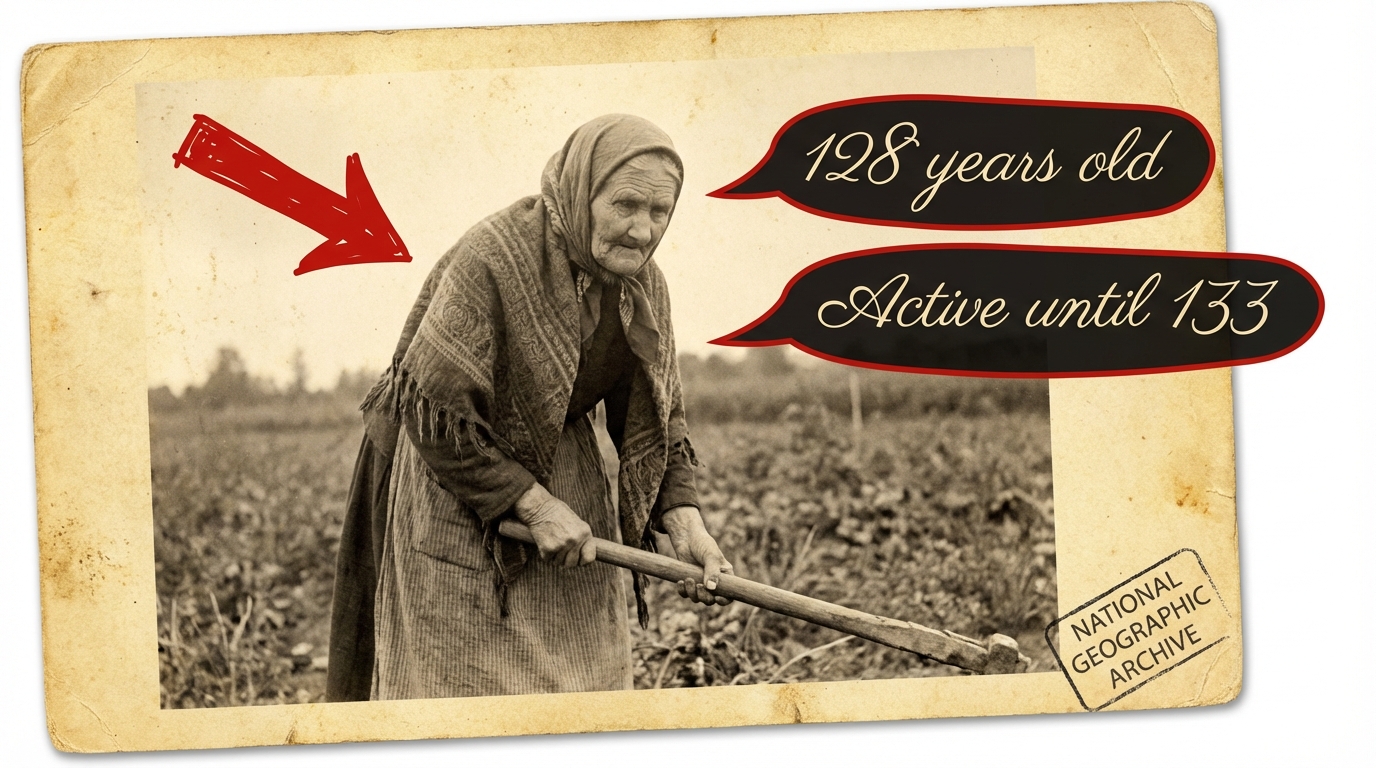
It's wild to hear, but she had worked on this plantation until she was 128.
In fact, she was even seen performing traditional folk dances at 133 years old!!!
So this is why Soviet research teams, Western anthropologists, and National Geographic crews all traveled to these villages through the 1960s and 70s.
-
01
They tested the water.
-
02
Studied the diet.
-
03
Measured the air quality.
And they all left asking the same question...
What are these women doing differently? Can we access it today?
Well, turns out, it wasn't exercise. Wasn't genetics.
Wasn't the altitude.
It was something they drank...
Every single day, from childhood until death — one to two glasses of a thick, sour, fermented milk called matzoni.
And these cultures had a very loud name...
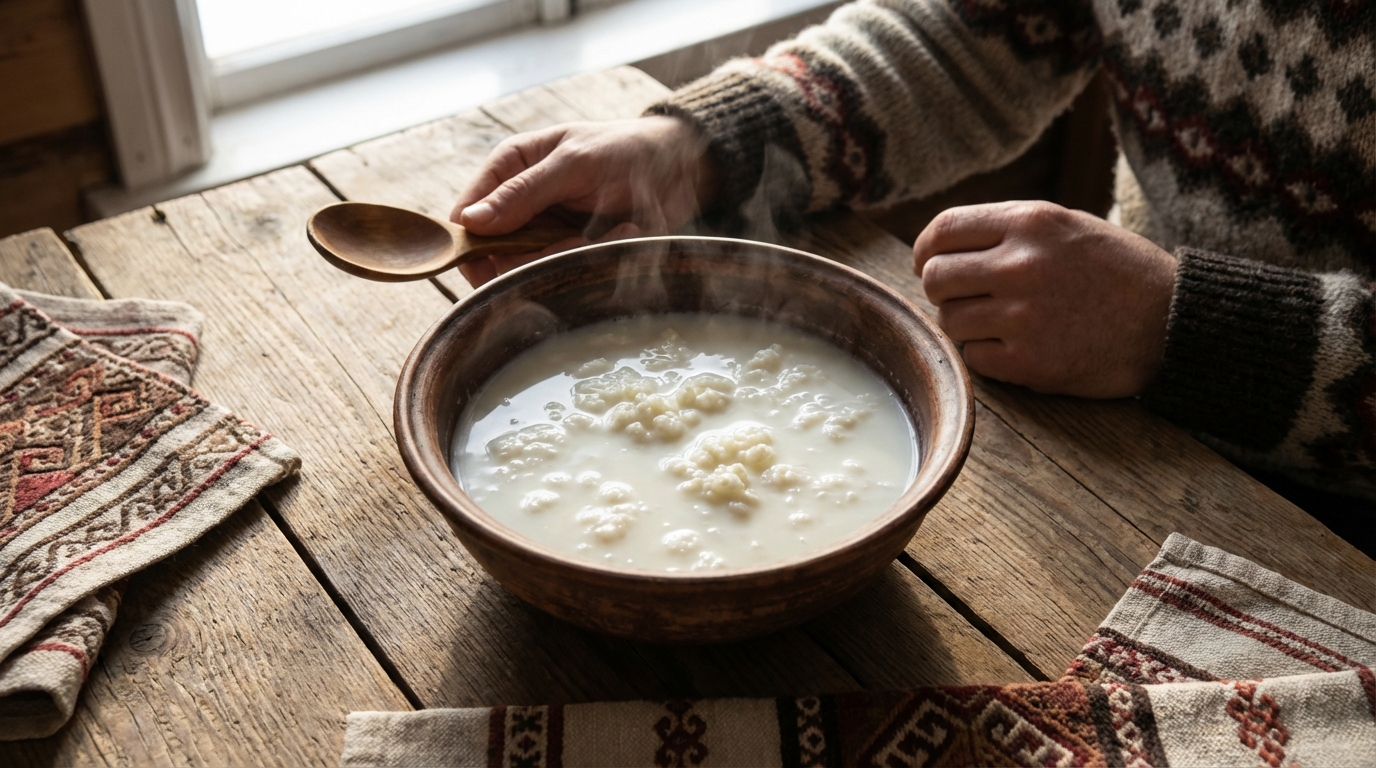
The "Grains of the Prophet."
According to local tradition, the Prophet Mohammed himself gifted these cultures to the mountain tribes centuries ago.
And he gave one command:
"never share them with outsiders, or the grains will lose their power."
So families passed them from generation to generation like inherited wealth.
And to give them away was considered a sin that would cost you the blessing forever.
Hence, the outside world could see the results. Because Caucasus people routinely lived past 100.
They were swimming in ice-cold mountain streams at ages when most people can barely walk to their mailbox.
But the women's vitality in particular...
...Their skin, energy, confidence and intimate health — went against everything Western medicine considered possible at those ages.
But nobody outside the mountains could get their hands on the grains. And for centuries, nobody even came close.

And so, by 1900, Russian doctors had enough of it
The All-Russian Physicians' Society knew matzoni had remarkable health properties — they just couldn't prove it because they couldn't get the cultures.
So they hired the Blandov brothers, owners of the Moscow Dairy who had a cheese factory at the edge of Caucasus territory, to get the sacred grains through any means necessary.
And of course, Russians kindly asked the tribal leaders directly. But the answer was NO.
So the Blandov brothers came up with a different plan.
They recruited a 20-year-old woman named Irina Sakharova.
She was a graduate of a Moscow cheese-making school who had already won awards for dairy innovation — sharp, accomplished, and by all accounts, beautiful.
They sent her with an armed escort to the court of Prince Bek-Mirza Barchorov, a Caucasian tribal leader known to love beautiful women.

Her mission was...
...to charm the prince into surrendering the Grains of the Prophet.
And so, during celebrations at the court, the prince was immediately taken with her. He showered Irina with flowers and gifts.
According to historical accounts, "he never took his eyes off her."
But he would not break the sacred law
No matter how much he wanted to please her, Irina returned home empty-handed.
Then, on the mountain road back to Kislovodsk, armed soldiers loyal to the prince kidnapped Irina Sakharova.
Why?
Because under Caucasian law, a man could claim a bride by capture. So, the prince proposed marriage.
But Irina refused
Unfortunately, Russian Tsar Nicholas II had 1000x times more power than Caucasian prince...
Which is why, he used Irina's kidnapping as an opportunity to accuse the prince of a crime.
Now, these sacred grains were finally in Russian hands. So what now?
Well... in September 1908, first bottles of commercially produced kefir went on sale in Moscow...
So what was actually inside those grains that was worth all of this? And why is it so important for us, ladies, in USA today?
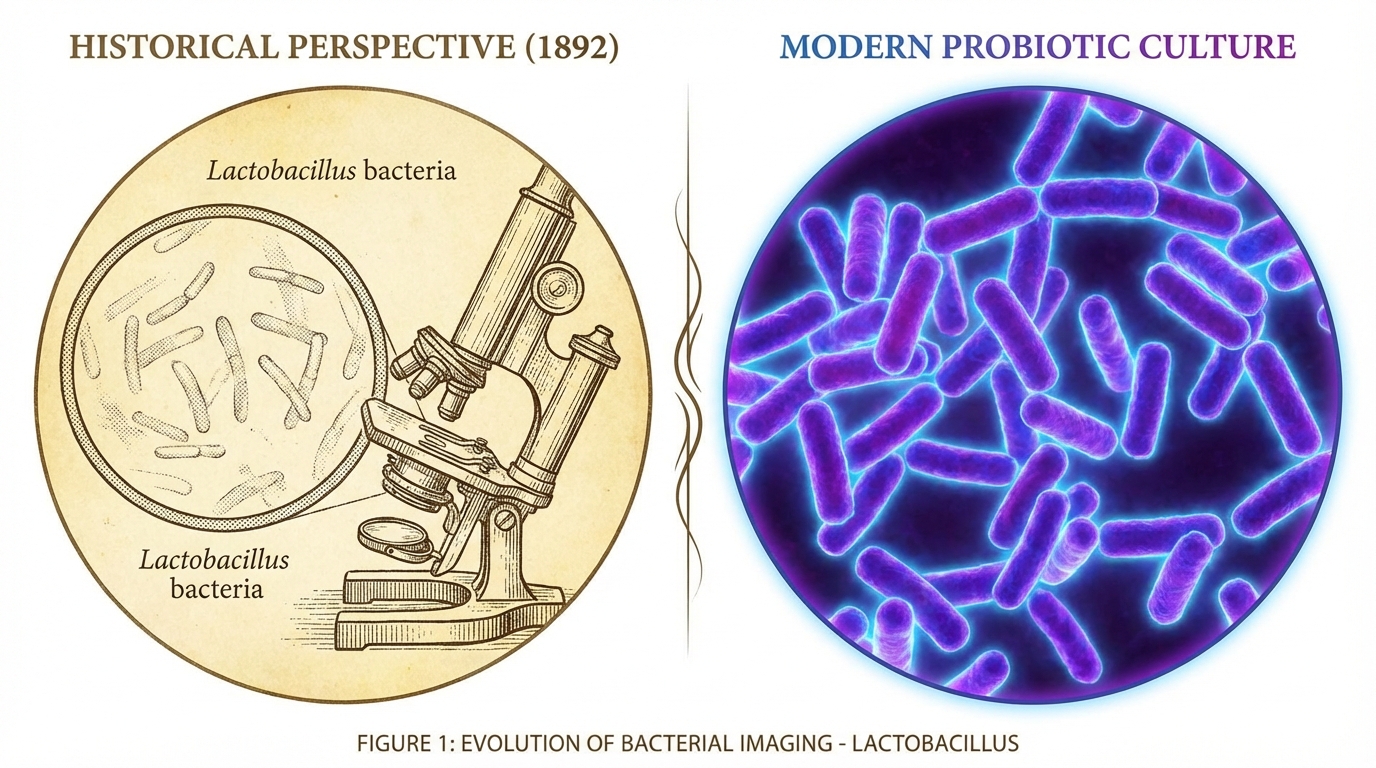
You see, In 1892, Albert Doderlein examined the vaginal fluid of nearly 200 pregnant women at a time when 1 in 6 mothers were dying of childbed fever in maternity wards.
What Doderlein found was a thick, rod-shaped bacterium that produced lactic acid.
When this bacterium was present in a woman's vaginal flora, the acidity killed the pathogens that caused the fever. So she was protected.
But when it was absent, she was vulnerable.
And this bacterium is now called Lactobacillus — or "Doderlein's bacillus."
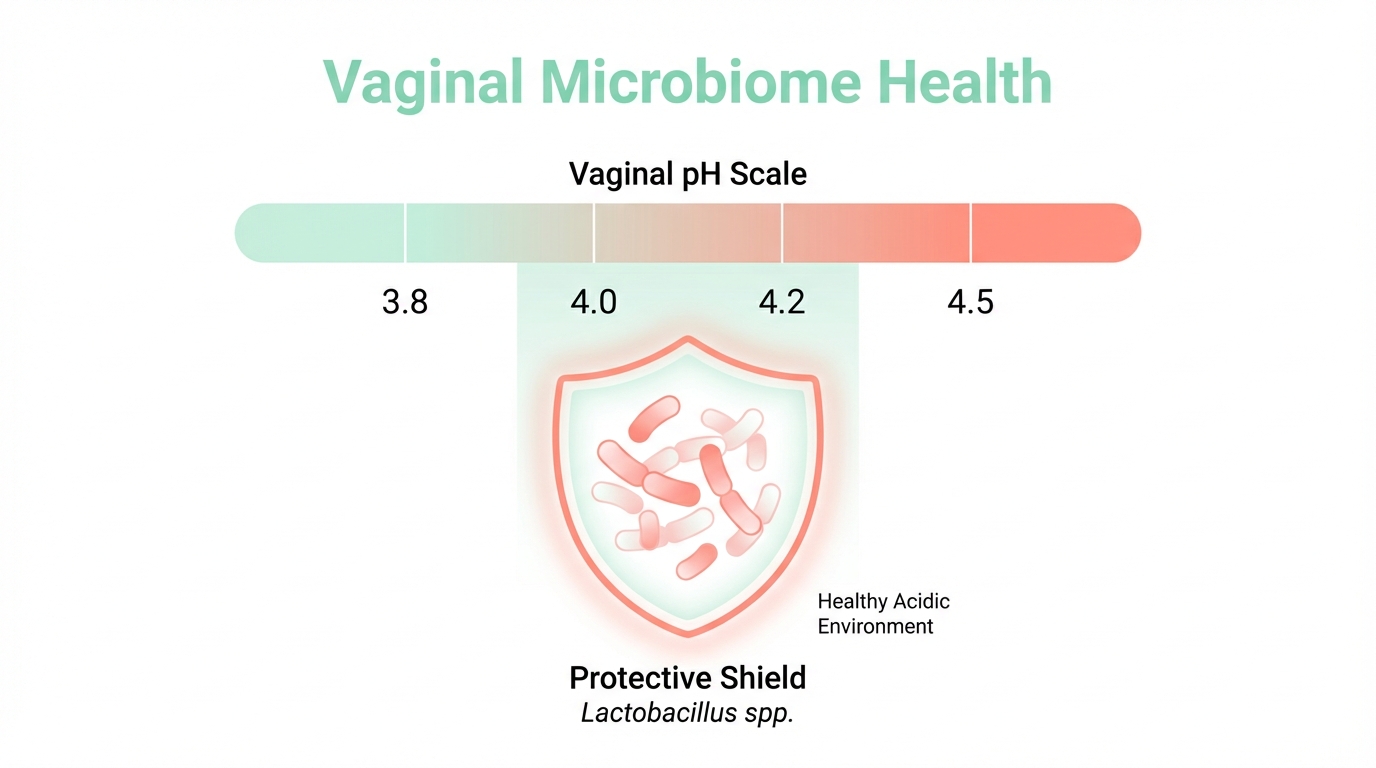
So here's how this makes 'scientific wonders' in your body
In a healthy woman, Lactobacillus makes up roughly 90% of vaginal bacteria. It produces lactic acid, which keeps vaginal pH between 3.8 and 4.5.
At that acidity level, almost nothing harmful can survive.
Which means, the organisms behind recurring infections, odor and discharge can't dominate over your flora.
Thanks to evolution, this defense system has been protecting us ladies for hundreds of thousands of years.
But there's one weakness
Every time we take antibiotics — even for something unrelated, like a sinus infection or a UTI — they don't just kill the harmful bacteria.
They carpet-bomb everything, including your Lactobacillus.
-
01
Hormonal shifts do it too.
-
02
Perimenopause/menopause.
-
03
New sex partner.
-
04
Post-pregnancy.
-
05
Even our monthly cycle.
Why? Because our Lactobacillus crashes, the pH rises above 4.5, and Gardnerella vaginalis floods in.
(Gardenella is the primary cause behind BV, yeast infections and dryness)
And it does two things that make it especially difficult to deal with, but also quite simple, quick & easy when you know about this:
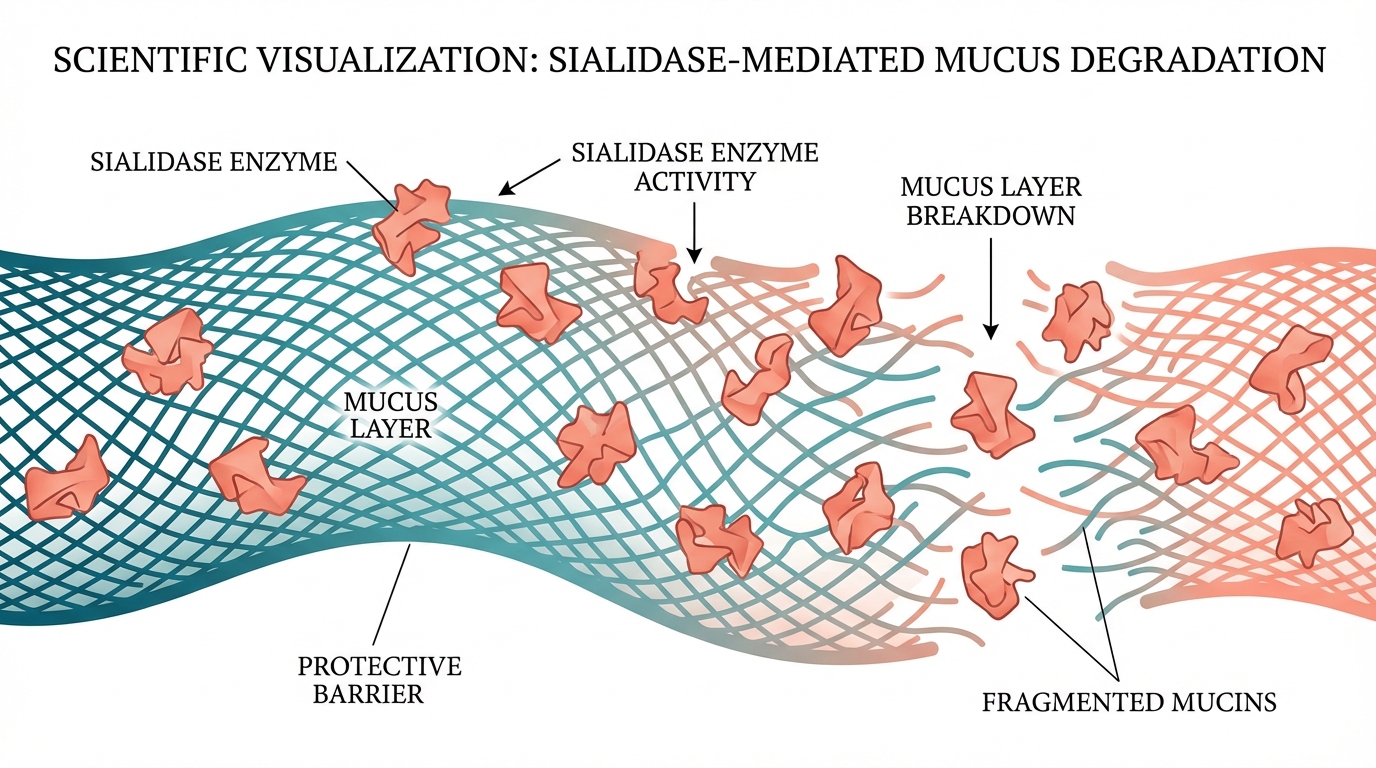
First, it produces enzymes called sialidases...
...These actively eat through your protective vaginal mucus layer.
Which means, the wall that's supposed to protect you is being consumed from the inside. Hence, this causes discomfort, dryness and unpleasant odor.
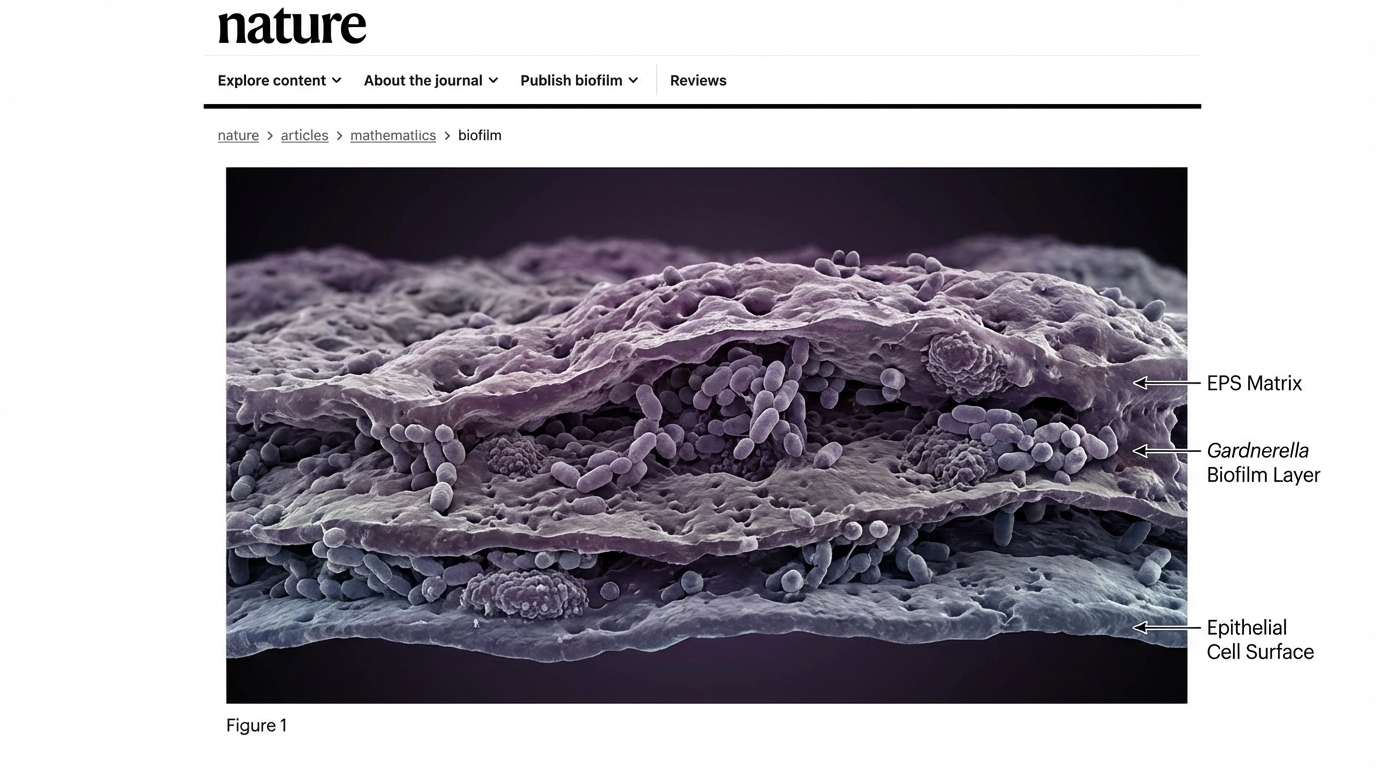
Second, Gardnerella builds a sticky biofilm...
And this is why 50 to 70% of women who take antibiotics or basic probiotics, often see odor come back within just couple of weeks.
Because these solutions clear the surface bacteria, but the biofilm stays intact, and Gardnerella regrows like wildfire.
And just like this, there are some bad, but also really good news for us...
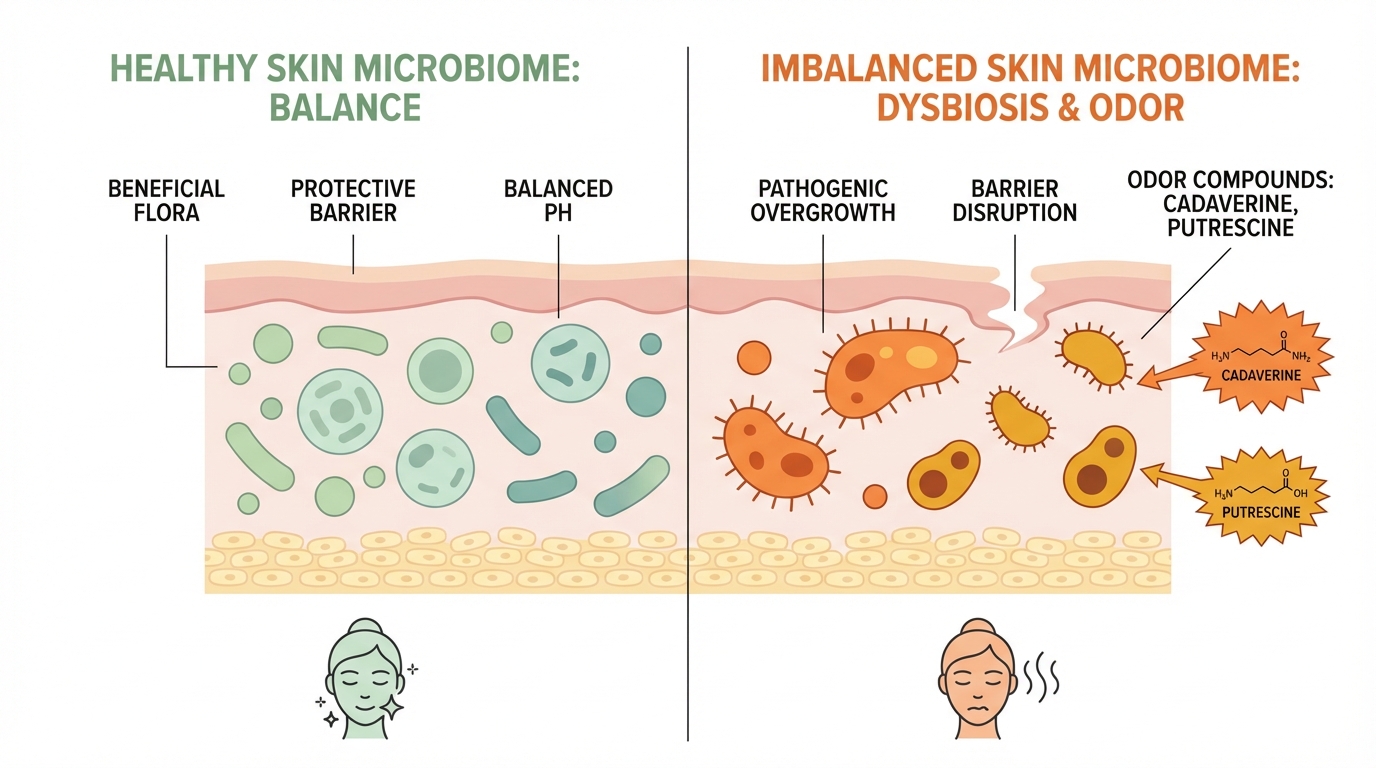
Turns out, it's not just our intimate health
And this is what surprised me the most when I was researching this...
You see, sweat, by itself, has no smell at all.
100% of body odor comes from bacteria on your skin breaking down your sweat into tiny little particles.
And the type of bacteria on your skin determines what those compounds smell like.
For one thing, we got cadaverine, which was found at 188 times higher concentration in women with vaginal bacterial imbalance compared to healthy women.
For another, Putrescine, was 61 times higher.
But does it mean all we need to do is to take more Lactobacillus? Well, yes and no...
A 2022 clinical study found that Lactobacillus reduced body odor long-term by 43.5% in 28 days and decreased the specific odor-causing bacteria by 18.6%.
So the connection between what's happening inside and how you smell on the outside is measurable, published, and a lot more direct than most people think.
Which is why so many women describe the problem not just as "something off down there", but as a:
-
01
General loss of confidence.
-
02
Feeling of not wanting to be close.
-
03
Checking themselves constantly.
-
04
Wondering if their partner can tell.

So naturally, millions of ladies turn to probiotics.
And the logic makes sense — if the problem is not enough good bacteria, then take more good bacteria.
But most probiotic supplements contain standard Lactobacillus strains — acidophilus, rhamnosus — and while these are the right type, they have a problem.
They're fragile.
The moment they hit your stomach acid, up to 99% of them die before they reach your vagina.
And if you're buying those probiotics from Amazon, it might be even worse than that.
Because right now there is something happening on Amazon that most women simply don't know about.
Anybody can list a supplement
You don't need to be a real brand. You don't need clinical testing.
You don't even need to prove what's actually inside your product. Reviews can be bought.
Labels can say anything.
And what a lot of women end up with a weak capsule or a sugar gummy with little to no live bacteria inside.

And this might sound new to you, but...
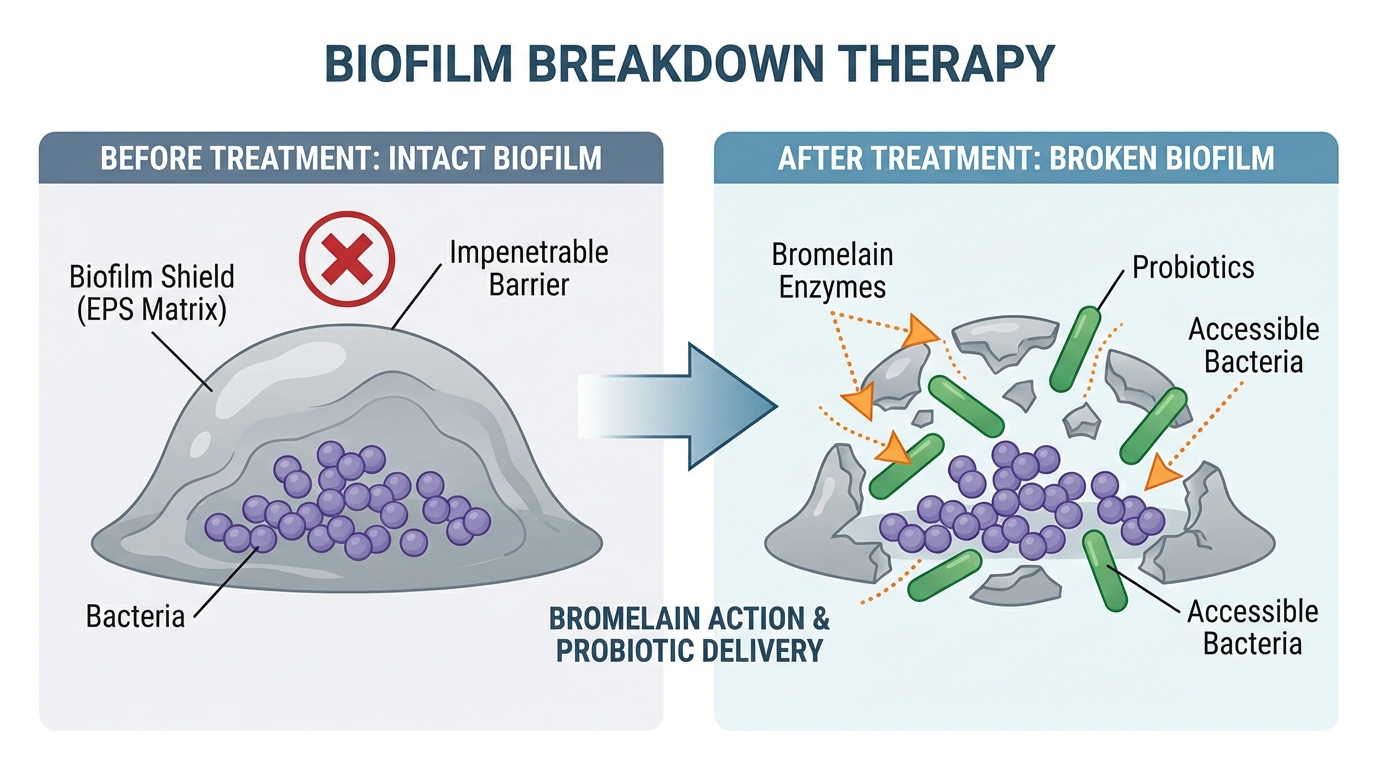
When you send probiotics to fight bad bacteria without first breaking down biofilm, it triggers something called dispersal.
The bacteria under the biofilm feel they're being attacked.
So instead of dying, they respond by shooting out small colonies of sticky biofilm across your vaginal environment, spreading the problem further, and making the whole situation significantly more difficult to fix than it was before you started.
So the supplement one lady bought to help her might actually be making the problem worse.
Why? Because dumping probiotics at a biofilm is just like throwing ice cubes into a deep fryer _(oh God... it's not good)_
And she wouldn't know, because the temporary relief from the few bacteria that did survive feels like it's working...
...Until two weeks later when everything comes back stronger.
While another lady, who eventually solved it with this approach I recommend (recently confirmed in _2024 Nature_ publication), wrote:
Now, you've probably heard this before...
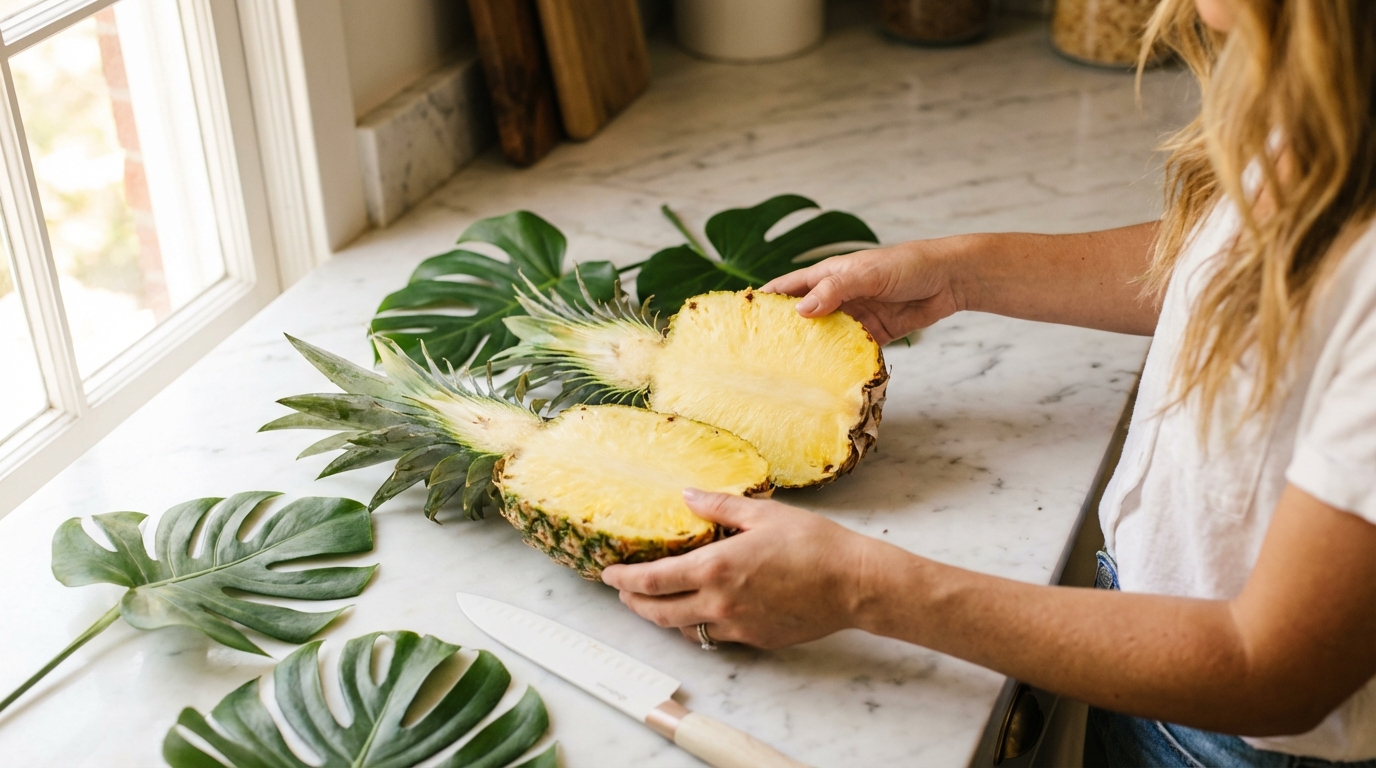
"Eating pineapple helps with how you smell and taste"
And there's a reason this belief exists, but it's not the one most ladies think.
The active enzyme in pineapple is called bromelain.
And bromelain is dissolves protein structures. And bacterial biofilm is built from proteins, see what I mean here?
But bromelain is concentrated in the stem of the pineapple. Not the fruit.
Which means, you cannot get a therapeutic dose of bromelain from eating pineapple.
The fruit and juice contain so little that it's not even close.
So when someone says "eat more pineapple" — they're pointing in the right direction but missing the target by a wide margin.
But it's not just about stem versus fruit
Where the pineapple is grown makes a real difference as well!
For example, Thailand produces excellent pineapples for eating — sweet, juicy, great for dessert.
But when you're looking for long term health benefits...

...China is your friend
You see, Xuwen County sits on the south of China.
Which means, the soil there is red, rich in selenium and iron, formed by volcanic eruptions from 177 ancient volcanoes across 8,000 square kilometers...
...and these eruptions started millions of years ago and left behind mineral deposits you don't find in regular farmland.
So this volcanic earth produces pineapples with such a quality of health enzymes that is simply not the same as what grows in standard tropical soil.
And in laboratory studies, bromelain has been shown to destroy 83 to 94% of bacterial biofilm.
Before writing this for you, I went through weeks of microbiome research
-
01
probiotic formulation studies
-
02
hundreds of customer testimonials across forums
-
03
review sites
-
04
clinical papers.
And what kept showing up was the same frustration:
Ladies who'd tried 5, 10, sometimes 15 different products that each fixed one small part of the problem but never the whole thing.
Then I came across Nuora.
What made it different — and the reason I'm writing about it — is the combination.
Nuora uses a specific type of Bacillus coagulans.
First discovered in 1915 by a bacteriologist named B.W. Hammer at the Iowa Agricultural Experiment Station, Bacillus coagulans is a spore-former.
It forms a protective biological shield...
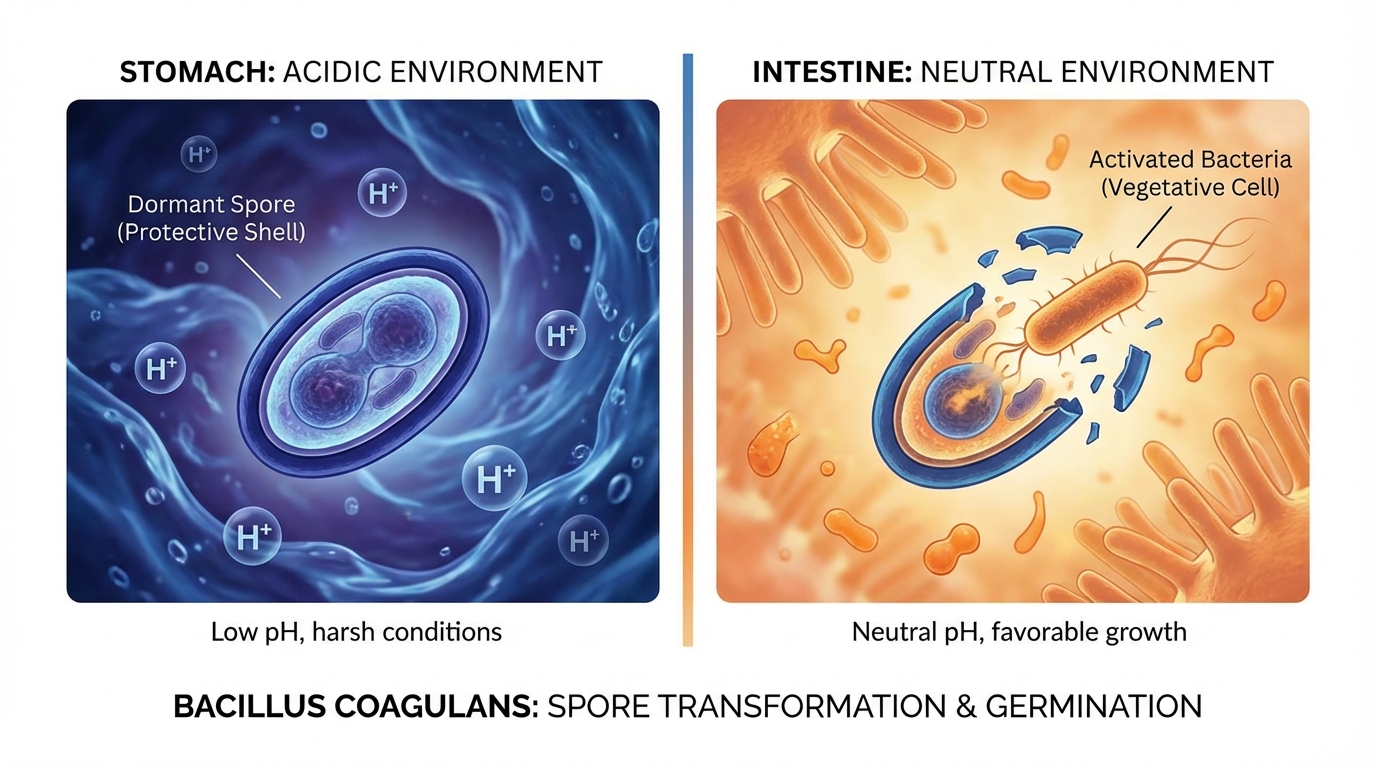
...And waits...
When it reaches the warm environment of the intestines, it opens the shell, activates, and starts producing lactic acid.
Same lactic acid the Caucasus women were getting from their sacred grains.
Same compound Doderlein found in 1892 as the guardian of feminine health. Except now, it arrives alive.
Then Nuora added bromelain from Xuwen pineapple stems _(as you remember, it's the enzyme that dissolves biofilm so these probiotics can actually reach your vaginal microbiome)_
Plus vitamin C, which supports your immunity better than any vitamin known to us.
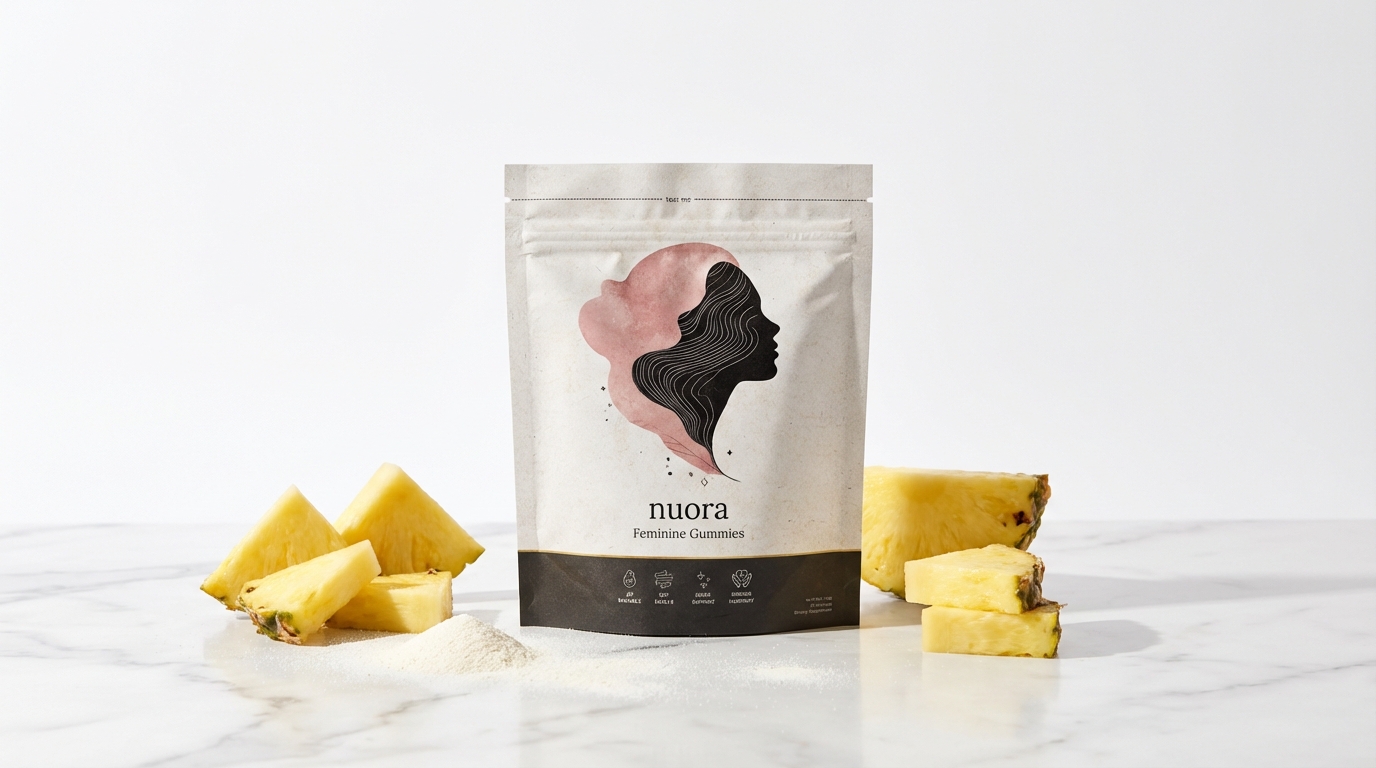
The founders are European, which matters...
...Because Europe has some of the strictest supplement regulations in the world.
They recently started selling in the United States, with a warehouse in New Jersey so they can ship directly and control quality from production to doorstep.
And the way they operate...
-
01
studying every piece of customer feedback
-
02
adjusting formulations based on what real women tell them
-
03
it's clear this is a product they personally stand behind
And based on what over 237,000+ ladies are actually reporting, the results are specific.
- 237,000+ happy customers
This woman in a five-year monogamous relationship — recurring BV from perimenopause — wrote:
Another lady forgot her gummies while traveling for work.
She even added: "My husband does say that I do taste good now. So ladies, take control of your health and body."
A woman eight years after a full hysterectomy:
And one that stuck with me:

So it comes down to an easy choice
Some ladies can keep buying whatever has decent reviews on Amazon, hoping the next round of antibiotics holds a little longer, doing the mental checklist every time their husband reaches for them.
A lot of women do this for years and it simply keeps increasing their stress elvels.
Or you can try something that's actually designed around how this problem works.
Nuora is a 3-in-1 gummy. It tastes naturally sweet & pure — women mention that constantly.
And it's made by European founders who spent years getting the formulation right before bringing it to the US market.
Right now, because you've read this far — and honestly, not many people do — there's obviously a specific offer on the page you'll see when you click through.
While it's not something they keep available all the time, and Nuora has dealt with supply issues in the past because of demand...
But when it works for you... and based on what thousands of women are reporting, there's a strong chance it will... then you've finally found the piece that was missing.
The founders built Nuora with this understanding:
Every woman's body responds at its own pace, and they'd rather you try it with zero risk than keep wondering
You learned something today.
And if you're still on this page, that probably means something clicked.
Yours in health, Dr. Alicia Darling, MD Board-Certified OB-GYN Director, Integrative Women's Health