Have you ever realized that probiotics might be a scam?
1 in 3 American women take probiotics for vaginal health. But if they actually worked, why does the smell keep coming back?
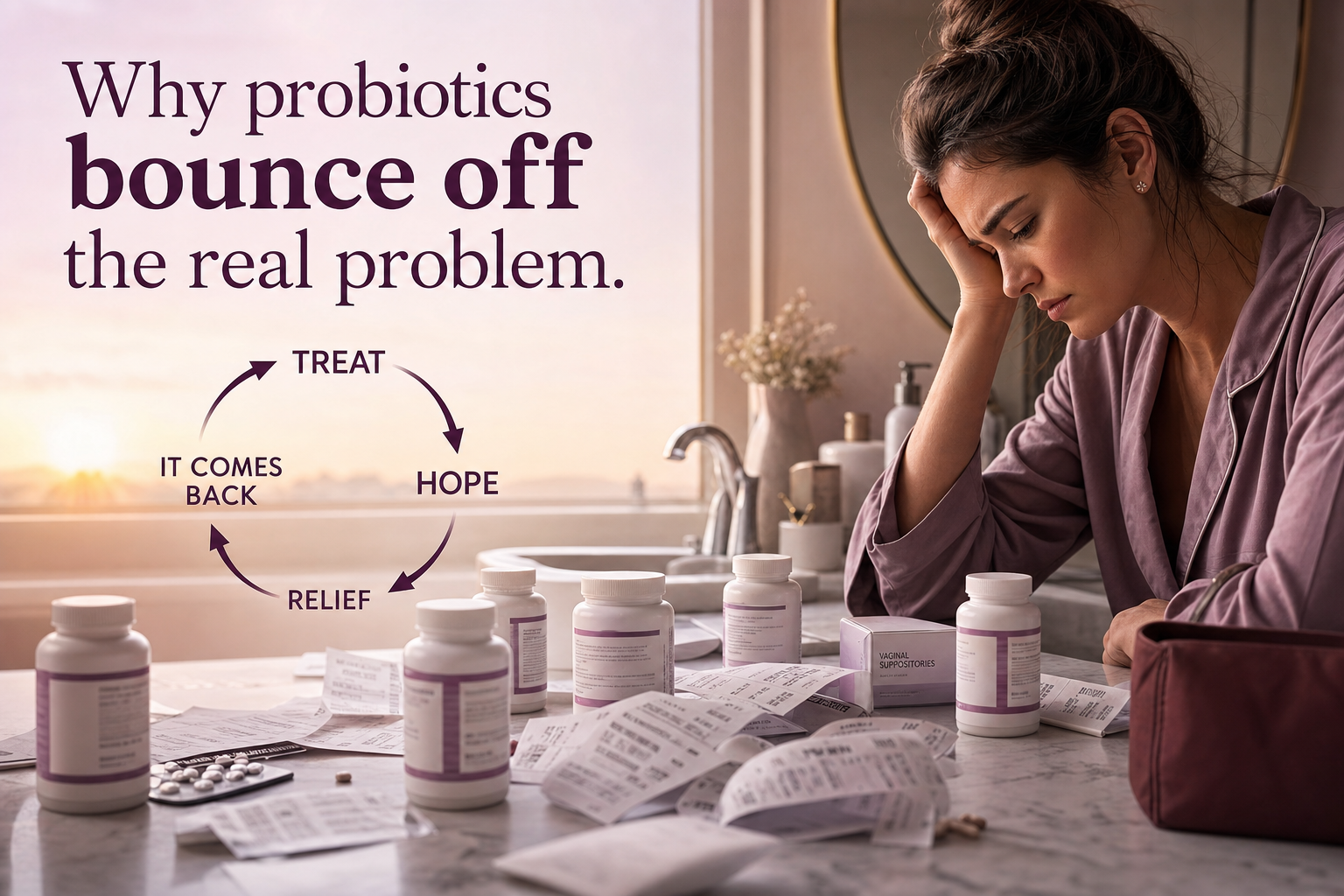
Why do you find yourself back at the pharmacy every few months buying another bottle, another suppository, another round of the same treatments that “worked” before?
My name is Dr. Sarah Weng, and I’ve been researching women’s sexual health for over 12 years. What I’m about to share is going to make you question what you’ve been told about treating vaginal odor.
Because if you’ve ever wondered why it keeps coming back, why it’s difficult to completely get rid of, or why the smell changes but still returns, the underlying reason it persists remains the same.
PROBIOTICS CAN’T WORK...
At least not on their own.Not because they’re bad bacteria. Not because you bought the wrong brand. Not because you didn’t take them long enough.
They can’t work because of something called biofilm.
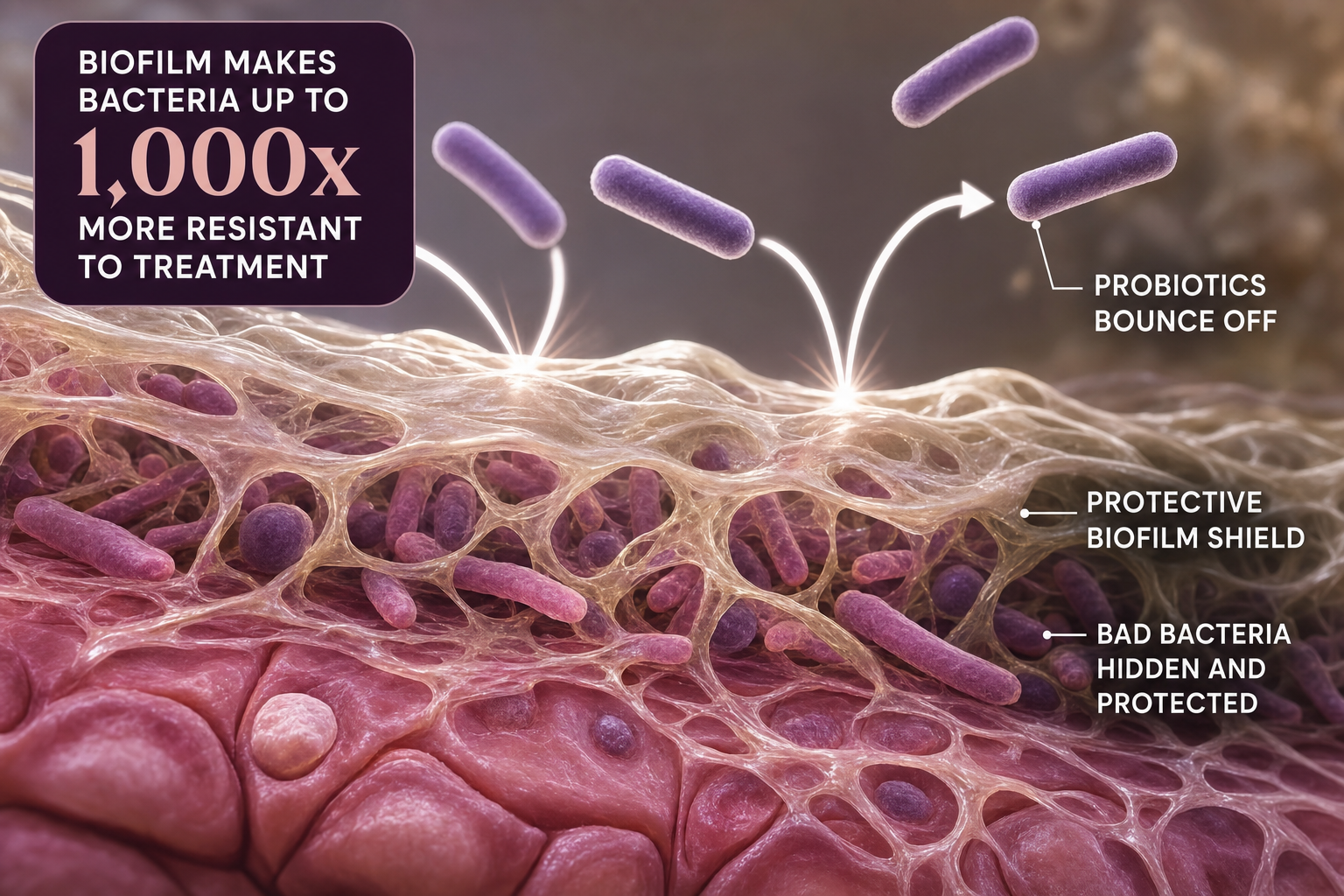
When bad bacteria overgrow in the vagina, they build protective shields around themselves called biofilms. Think of it like plaque that builds up on teeth when it is not brushed away. This protein coating makes bacteria 10–1,000x more resistant to treatments.
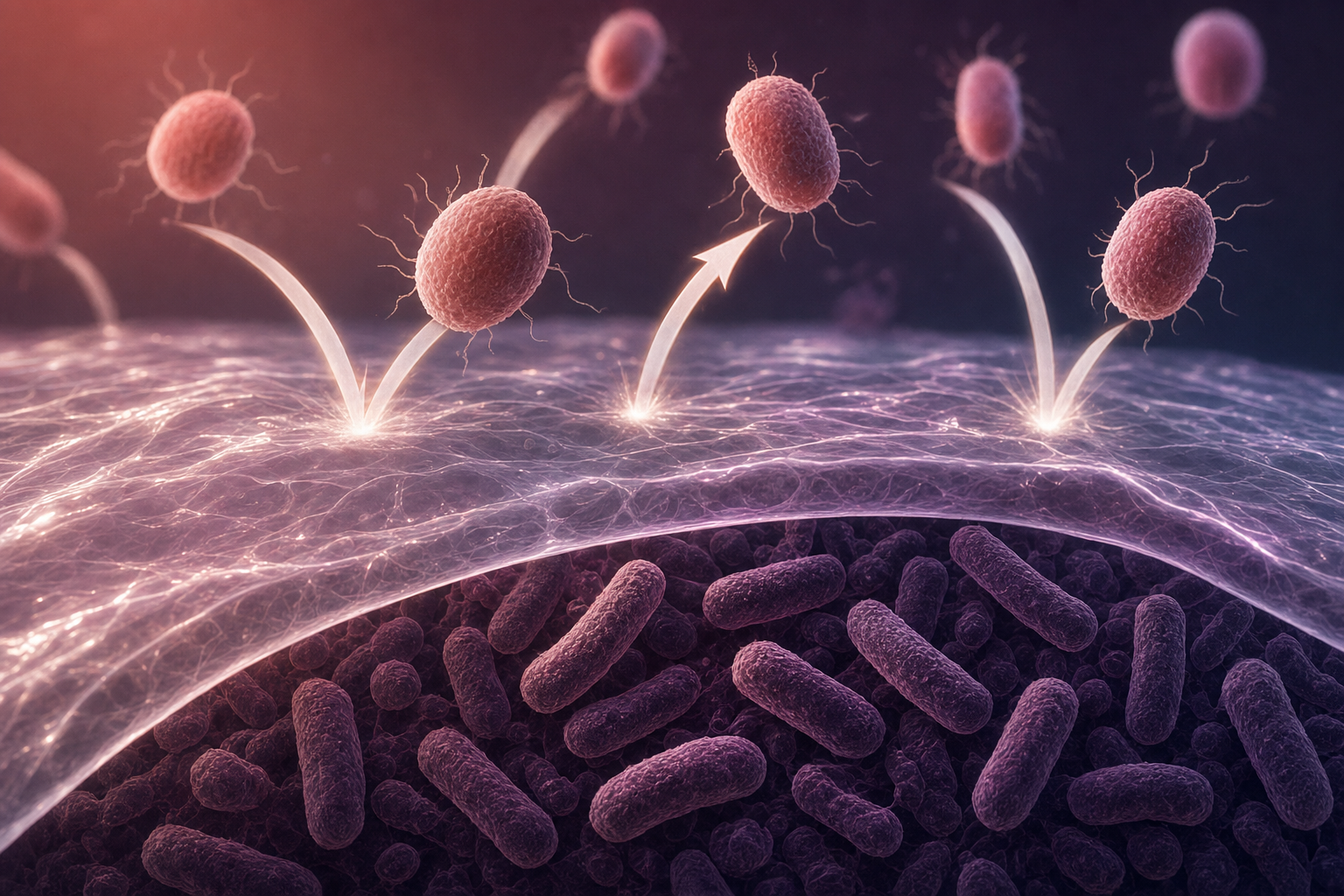
So when a probiotic is taken, the good bacteria can’t reach the tissue to colonize. They bounce off the biofilm surface while the bad bacteria underneath keep growing, protected by the shield.
And that is why the smell comes back after a few days or weeks.
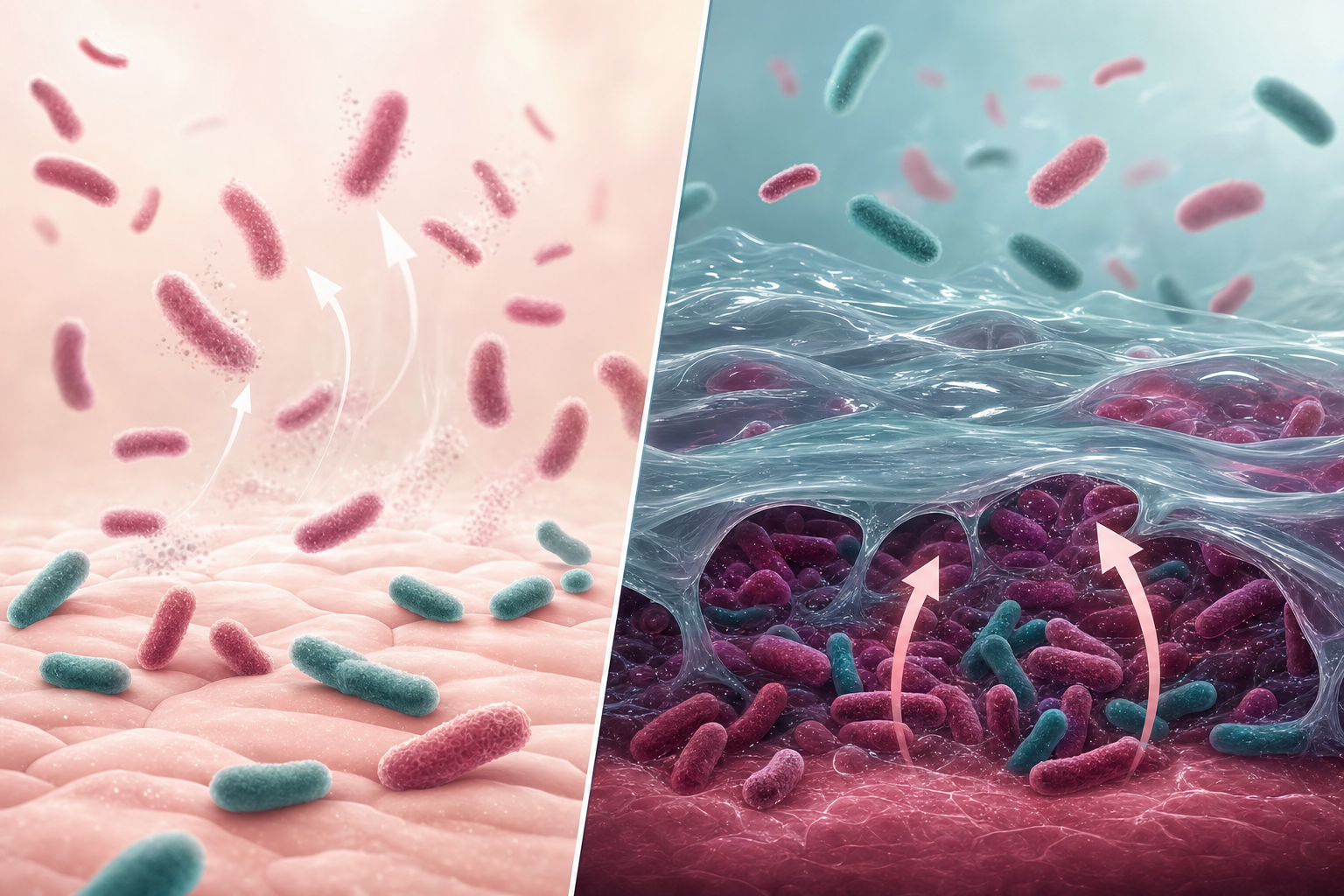
A 2018 Milan study showed that biofilms are responsible for up to 80% of recurring vaginal issues. The research has been published for years, but it rarely makes it into the advice women hear at the pharmacy.
Antibiotics
They can wipe out surface bacteria and provide relief for a few days. But the bacteria hiding under biofilm can survive while good bacteria are also reduced.
Boric acid
It can temporarily shift pH, but it does not break down biofilm. When pH returns to normal, protected bacteria can start growing back.
The missing step
You cannot kill bacteria you cannot reach. The biofilm barrier has to be addressed first.
“This is why women tell me they’ve done 10, 15, 20 rounds of boric acid and the smell keeps coming back.” — Dr. Sarah Weng
And you can’t kill bacteria you can’t reach.
So what’s the solution?
We have to break down the biofilm first before introducing any probiotics or treatments. There is one natural enzyme from pineapple stems called bromelain that can do this.
I know what you’re thinking: pineapple stems? But a 2024 peer-reviewed study showed that bromelain can dissolve up to 98% of vaginal biofilm structure, specifically bromelain from stems, where enzyme concentration is higher.
Once the biofilm is broken down, bad bacteria are exposed so the body can deal with them, and good bacteria can actually colonize tissue properly to rebalance the microbiome.
But what is the best probiotic to use once the biofilm is broken down?
Most probiotics fail for two reasons. First, 97% of regular probiotics die in stomach acid before they reach the gut. Second, after age 35, estrogen starts to decline, and glycogen levels in vaginal tissue decline too. Glycogen is what feeds probiotics.
The only type that solves both problems is spore-forming probiotics. Spore-forming probiotics like Bacillus coagulans have a protective shell around them, so nearly 100% survive the journey and can thrive even in a lower-glycogen environment.
may die in stomach acid before reaching the gut.
survive with a protective shell designed for harsh environments.
Different smells. Same blocked-treatment problem.
The bacteria can differ by smell type, but they all create biofilms that block treatments the same way.
Fishy vaginal smell
If you’re dealing with a fishy smell, especially one that gets worse after sex or during your period, this is commonly associated with overgrowth of anaerobic bacteria like Gardnerella vaginalis. These bacteria thrive when vaginal pH rises above 4.5 and produce amines, the compounds that create that distinct odor.
The surface bacteria may die off temporarily, but the bacteria under biofilm survive and repopulate. Once the biofilm is broken down and spore-forming probiotics can colonize, many women notice the fishy smell gone within 5–7 days.
Musty or stale smell
If the smell is musty, stale, or reminds you of old towels, it may involve a high-diversity microbiome with bacteria like Actinobacteria. This type of bacterial pattern can produce a thicker biofilm, making standard treatments even easier to outlast.
The same sequence applies: dissolve the barrier, then restore good bacteria that can survive and colonize. In the source protocol, this pattern often clears within 7–10 days.
Ammonia or pee smell
If you’re dealing with a sharp ammonia or urine-like smell, bacteria like Prevotella bivia may break down urea into ammonia gas. It can feel like you smell like pee even right after showering.
This is not a hygiene problem. It is a bacterial problem protected by biofilm. Once the biofilm is addressed first, the ammonia smell often resolves within 5–7 days.
THE ONLY SOLUTION THAT ADDRESSES THE ROOT CAUSE
Break the barrier first. Then rebuild the microbiome.Nuora Vaginal Probiotic Gummy
After 12 years of research, I’ve only found one product that does both things we need: it breaks down biofilm with real bromelain from pineapple stems, and it delivers probiotics that actually survive to colonize the vaginal tissue.
- Queen pineapple stem bromelain
- Bacillus coagulans SNZ-1969
- Pectin prebiotic + vitamin C support
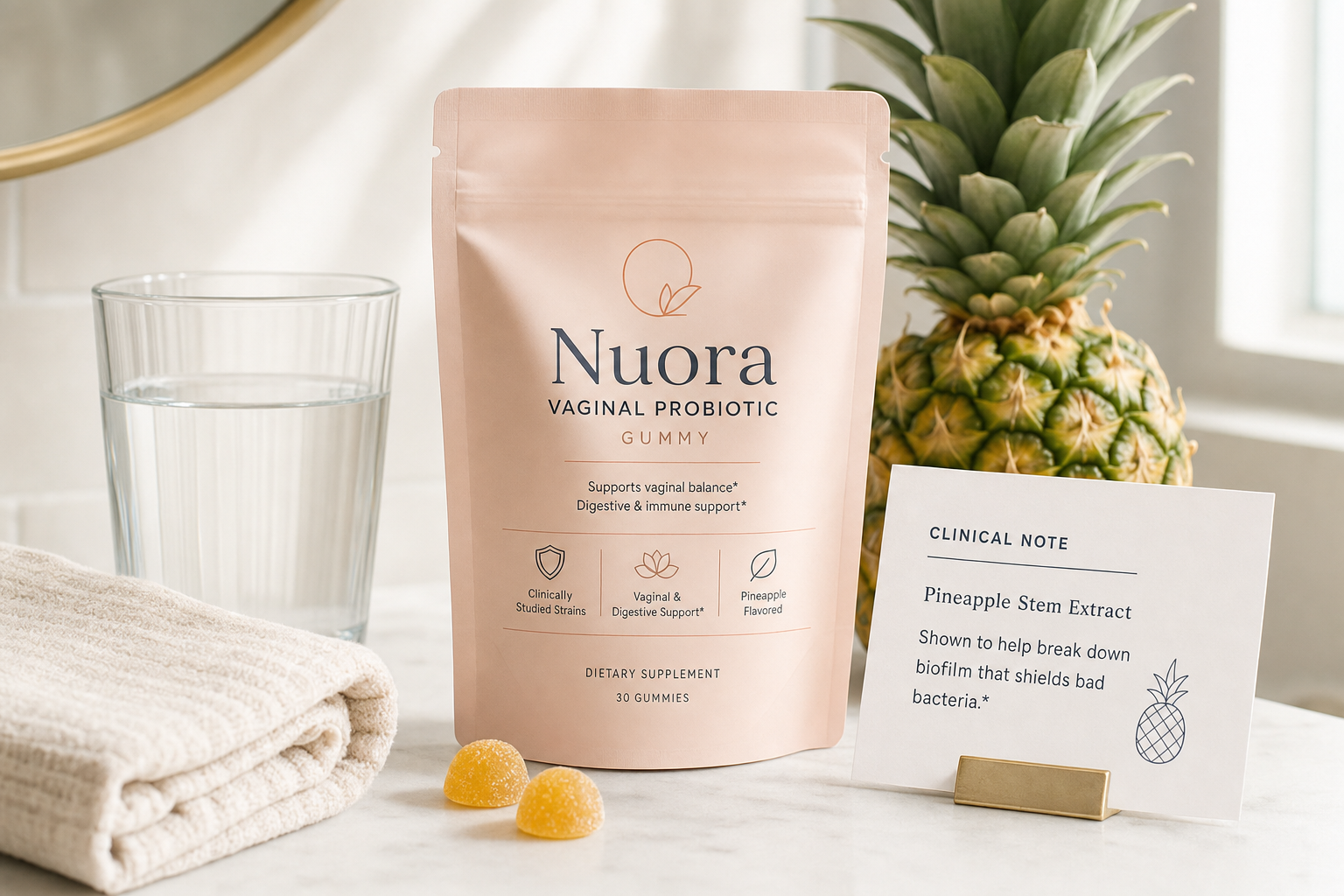
Bromelain from Queen pineapple stems
Nuora uses bromelain extracted from stems, not fruit flavoring. The Queen variety is described in the source copy as having 40% higher bromelain concentration.
Bacillus coagulans SNZ-1969
A spore-forming probiotic with a protective shell that survives stomach acid so the full dose can reach the gut-vagina axis.
Pectin
A prebiotic that feeds good bacteria once they colonize, helping them thrive and stick around.
Vitamin C
Included to support vaginal tissue repair from bacterial damage and inflammation.
The smell starts to fade as biofilm breaks down and good bacteria reestablish.
The smell is gone in the source timeline.
The key milestone is that it does not come back after periods, suggesting the biofilm barrier was actually addressed.
So why haven’t you heard about this before? Because most doctors are taught to prescribe antibiotics for acute infections and recommend probiotics for maintenance. But the research on biofilm has only been published in the last few years, so the system has not caught up.
If you’re tired of the smell coming back, tired of buying probiotics that don’t work, and tired of feeling like you’ve tried everything, it is not your fault. It is the biofilm.
Break down the biofilm first with real bromelain from pineapple stems, then introduce probiotics that actually survive. That is how you stop the cycle instead of masking symptoms.
Try Nuora while the first-time customer offer is active.
If the smell is not gone within 2–3 weeks, Nuora offers a full refund. No questions asked.
GET NUORA NOW - Special Offer Secure checkout • Special discount for first-time customers • Inventory availability may vary